
An anode rod is a metal rod inside your tank water heater that corrodes on purpose so your tank does not. It is called a sacrificial anode: as long as enough of it remains, it slows rust inside the steel tank. Once it is fully depleted, the tank itself starts to corrode, and that is how many water heaters end up leaking years before they should. In Tucson, where hard water accelerates sediment buildup and water softeners are common, both factors affect how fast an anode wears out. Here is how it works, the types available, the signs yours needs attention, and how a Rite Way plumber can inspect your water heater and recommend what it needs.
Key Takeaways
- An anode rod is a sacrificial metal component that corrodes instead of the tank, extending the water heater’s life.
- Tucson’s hard water accelerates sediment buildup. Water softeners can also speed up anode wear and may require more frequent inspection.
- Signs the rod may need attention include rusty hot water, a rotten egg smell from hot water only, and popping or rumbling sounds from the tank.
- Do not remove the anode rod to stop an odor. Replace it with a different type instead. Removing it permanently shortens tank life and can void the warranty.
- Most tankless water heaters do not use an anode rod. Tank models do, including hybrid heat pump water heaters.
What Does an Anode Rod Do?
Tank water heaters are made from steel lined with a thin layer of glass to slow corrosion. That lining is not perfectly sealed: fittings, welds, and small gaps leave exposed steel in contact with water. Without protection, those spots would begin to rust.
The anode rod hangs inside the tank from a fitting at the top and extends down into the water. It is made from a metal that corrodes more readily than steel. Because of how electrochemical corrosion works in water, the rod corrodes preferentially, giving up its metal to protect the exposed steel in the tank. As long as the rod has enough material left, it keeps sacrificing itself to slow tank corrosion. When it is fully consumed, that protection stops and the tank begins to degrade from the inside.
Types of Anode Rods
Not all anode rods are created equal, and the one that works best in your water heater depends largely on your local water quality. In Tucson and throughout Southern Arizona, hard water is a fact of life. The minerals in our water supply put extra stress on water heater tanks, which makes the anode rod even more important here than in softer water markets. Choosing the wrong type or ignoring a depleted rod can lead to corrosion, sediment buildup, and a water heater that fails years before it should.
Different materials suit different water conditions and situations. Your water heater manufacturer’s documentation is the most reliable guide for your specific unit.
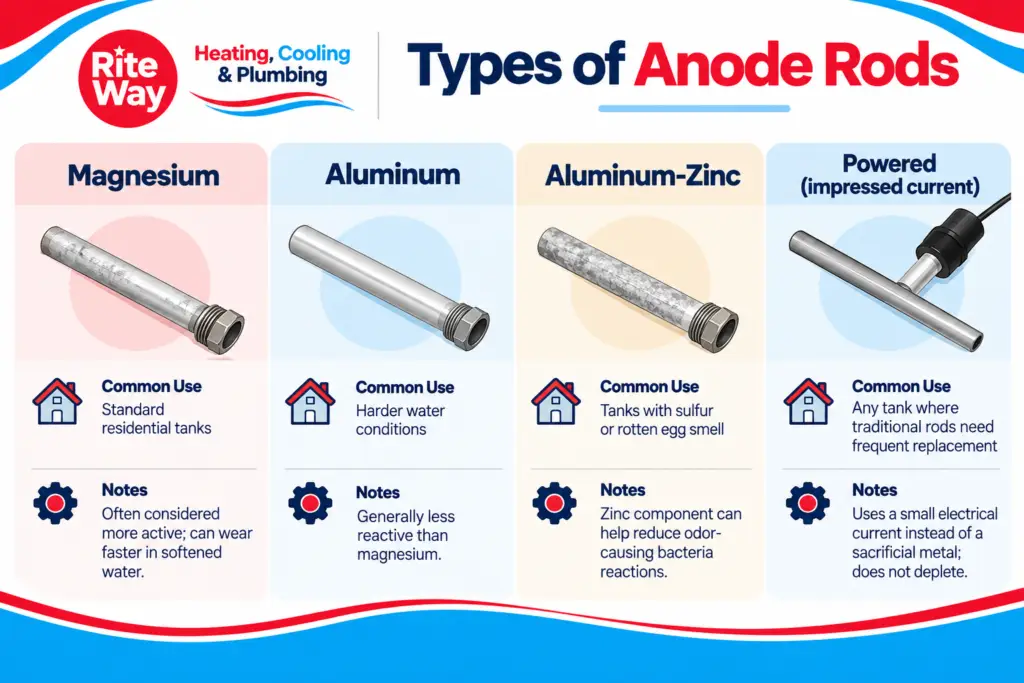
One thing worth noting for Tucson homeowners: if you have ever noticed a rotten egg smell coming from your hot water, an aluminum-zinc rod may be worth discussing with your technician. That odor is typically caused by sulfur bacteria reacting with a standard magnesium rod, and switching rod types is often a straightforward fix.
Powered anode rods are a good option for homeowners who want to reduce how often the rod needs to be checked or replaced. Since they use an electrical current rather than a sacrificial metal, they do not deplete over time the way traditional rods do.
Not sure what type of anode rod is in your water heater or when it was last inspected? Rite Way can take a look during a water heater service visit and let you know exactly where things stand. Catching a worn rod early is one of the most cost-effective ways to protect your tank and extend its life.
Signs Your Anode Rod Is Worn Out
The anode rod is inside a sealed tank, so visible wear is not something most homeowners can check without partial disassembly. Look for these indirect signs that the rod may be depleted or the tank may be corroding.
Rusty or discolored hot water: If only the hot water appears reddish or brown, internal tank corrosion is a likely cause. Cold water running clear while hot water is discolored is a meaningful distinction worth noting.
Rotten egg smell from the hot water tap: A sulfur smell that appears only in hot water usually points to bacteria reacting with the anode rod material rather than a drain or pipe issue. See the section on rotten egg smell below for more.
Popping or rumbling from the tank: Sediment buildup at the bottom of the tank, common in Tucson’s hard water supply, produces this sound as water heats beneath it. Heavy sediment can also coat and insulate the anode, reducing its effectiveness.
Water heater age: Rite Way puts the typical lifespan of a tank water heater at 8 to 12 years. A unit approaching or past that range is worth having inspected, including the anode rod, before making repair decisions. Contact Rite Way for water heater repair and service.
Annual water heater maintenance is the most practical time to have the anode rod checked. Rite Way’s water heater maintenance covers the rod, sediment flushing, and a full system inspection in one visit.
How Often Should an Anode Rod Be Checked?
Most manufacturers recommend inspecting the anode rod every one to three years, but the right interval depends on your water conditions and usage. Defer to your water heater manufacturer’s documentation for the specific guidance that applies to your unit.
In Tucson, where the water supply is classified as hard to very hard, sediment accumulates faster than in softer-water markets, which can affect how the rod performs over time. Homes with water softeners may also need more frequent checks, as explained in the next section.
The most practical approach is to have the anode rod inspected during annual water heater maintenance rather than tracking a separate calendar for it.
Hard Water, Water Softeners, and Your Anode Rod
Tucson Water classifies the local supply as hard to very hard, which means the water carries dissolved minerals that accelerate sediment buildup inside the tank. That sediment can coat the bottom of the tank and, over time, limit how effectively the anode can protect the tank walls beneath it. Annual flushing and anode inspection are both more important in a hard-water market than in areas with softer water.
Water softeners are common in Tucson homes precisely because of the hard water supply. However, softened water conducts electricity more readily than hard water, which can cause a sacrificial anode to deplete faster than it would in unsoftened water. Many water heater manufacturers recommend checking the anode more frequently in homes with softeners. If your home has a whole-home water softener, ask a Rite Way plumber to confirm the right inspection interval for your specific unit.
Anode Rods and Rotten Egg Smell
A hot-water-only sulfur smell, the kind that comes from the hot tap but not the cold, usually points to bacteria in the tank reacting with the anode rod material. The fix is not to remove the rod but to replace it with a different type, typically one containing zinc, which can reduce the reaction. The tank may also need to be flushed and disinfected. Removing the anode rod permanently to stop the smell shortens tank life and can void the manufacturer’s warranty. For more on water odors from hot water and drains, see our post on why your water smells like rotten eggs.
Can You Replace an Anode Rod Yourself?
Anode rod replacement is possible as a DIY project, but several factors make it harder in practice than it appears.
The rod threads into a fitting at the top of the tank and requires a large socket, often 1 and 1/16 inch, plus significant torque to break loose. After years in hot mineral-heavy water, the rod fitting is frequently seized. Forcing a difficult removal risks damaging the tank fitting, which is a much more expensive problem than the rod itself.
Most Tucson homes with water heaters in garages or utility closets also lack the overhead clearance to pull a standard-length rod straight out. Flexible or segmented rods exist for this situation and require knowing your tank model and configuration before purchasing.
If you decide to attempt it: turn off power and cold water supply to the unit, drain enough water to reduce pressure, apply penetrating lubricant and let it soak before attempting removal, and never remove the rod without replacing it immediately. The tank should never operate without an anode rod in place.
For most homeowners, this is a practical job to leave to a plumber, particularly on an older tank or in a tight installation.
Do Tankless Water Heaters Have Anode Rods?
Most tankless water heaters do not use an anode rod. Because they heat water on demand without storing it in a tank, there is no standing water and no steel tank to protect through sacrificial corrosion. The primary maintenance need for a tankless unit in Tucson is descaling the heat exchanger to remove mineral buildup. Rite Way handles tankless water heater maintenance for Tucson-area homeowners.
Hybrid or heat pump water heaters, which do have a storage tank, typically include an anode rod and follow the same maintenance guidance as standard tank units. Check your specific model’s documentation.
When It’s Not Worth Replacing the Anode
If the water heater is approaching or past the 8 to 12-year mark that Rite Way cites as the typical tank lifespan, or if there are signs of active corrosion in the tank itself, replacing the anode rod may not address the underlying issue. At that point, a Rite Way plumber can evaluate whether water heater installation makes more sense than servicing a unit near the end of its useful life. See also our post on water heater leaking for what to check when the tank itself shows signs of trouble.
Have Questions About Your Water Heater? Rite Way Has Answers.
Rite Way’s licensed plumbers serve Tucson, Marana, Oro Valley, Vail, Sahuarita, Green Valley, and communities throughout Southern Arizona. Whether you need a water heater inspection, an anode rod evaluated, or a full system replacement, we give you honest options and upfront pricing before any work begins. We have been serving Arizona homeowners since 1959 and answer phones 24/7.
