
A running toilet usually means water is either leaking from the tank into the bowl or the fill valve is not shutting off. The most common culprits are a worn flapper, a chain that is too short or tangled, a float set too high, or a failing fill valve. In Tucson, hard water speeds up wear on all of these parts and can keep a flapper or seal from closing properly even when it looks fine. Most fixes are quick and inexpensive. Here is how to stop the water right now, how to find the cause in two minutes, and when to call a Rite Way plumber.
Key Takeaways
- A running toilet is almost always caused by water leaking into the bowl through a worn flapper or seal, or by the fill valve not shutting off correctly.
- Look in the tank first. Whether water is running into the overflow tube or the water level is fine but the tank keeps refilling tells you which problem you have.
- Most fixes involve inexpensive parts. The question is whether the fix is the whole answer or a symptom of a bigger issue.
- According to EPA WaterSense, a leaky toilet can waste about 200 gallons of water every day.
- In Tucson, hard water leaves mineral deposits on flappers, seals, and fill valves that can prevent them from seating or closing correctly.
Stop the Running Right Now
Lift the tank lid and check whether the flapper is stuck open. Press it down gently. If the running stops, you found it. Jiggling the handle can also reset it temporarily. If the toilet keeps running or you cannot stop it, turn the shutoff valve behind the toilet clockwise until it is fully closed. This stops water from entering the tank without turning off water to the whole house. If water is overflowing onto the floor, shut the valve off immediately and call Rite Way’s 24/7 emergency plumbers.
How a Toilet Tank Works
When you flush, the handle lifts the chain, which pulls the flapper up off the flush valve opening at the bottom of the tank. Water rushes into the bowl and the tank empties. As the water level drops, the float descends and triggers the fill valve to open and refill the tank. When the water reaches the set level, the float rises, the fill valve shuts off, and the flapper sits back down to seal the tank. The overflow tube is a safety measure: if the water level rises above it, excess water drains into the bowl instead of overflowing onto the floor.
A running toilet means one of these steps is not completing correctly.
Find the Cause: What’s Happening in Your Tank?
A running toilet is one of those problems that is easy to ignore because it does not feel urgent. But a toilet that runs constantly can waste hundreds of gallons of water per day, which adds up fast on a Tucson water bill. The good news is that most causes are straightforward once you know what you are looking at.
Lift the tank lid and observe. What you see narrows down the cause quickly.
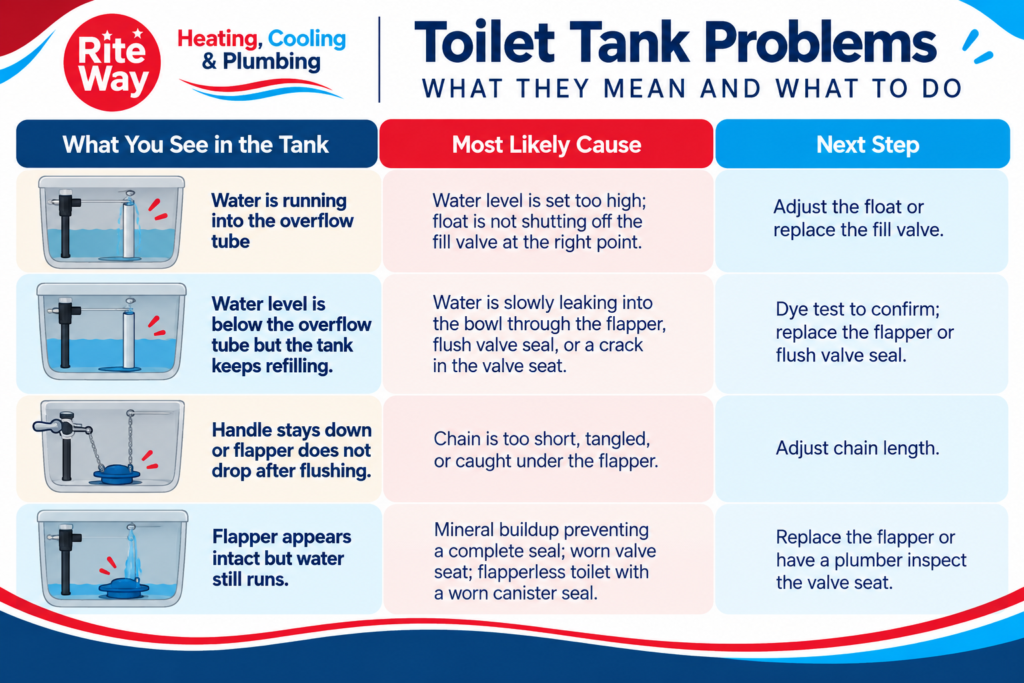
Dye test to confirm a tank-to-bowl leak: Put a few drops of food coloring into the tank without flushing. Wait 10 to 15 minutes. If the color appears in the bowl without a flush, water is leaking through the bottom of the tank. Flush a few times after to clear the color.
Many of these fixes are DIY-friendly, but if you have worked through the steps and the toilet is still running, it may be time to have a plumber take a look at the valve seat or internal components. Rite Way handles toilet repairs throughout Tucson and can usually diagnose the issue in a single visit.
6 Common Reasons Your Toilet Keeps Running
1. Worn or Warped Flapper
DIY fix: Yes
The flapper is the rubber seal at the bottom of the tank that covers the flush valve opening. Over time it hardens, warps, or cracks and can no longer form a watertight seal. This is the most common cause of a running toilet. Replacement flappers are inexpensive and widely available. Check your toilet’s brand and model number before buying, as flapper sizes vary, and bring the old one to the hardware store for a direct match.
2. Chain Too Short, Too Long, or Tangled
DIY fix: Yes
The chain connects the handle to the flapper. If it is too short, the flapper cannot fully close after a flush. If it is too long, it can get caught under the flapper and prevent the seal. The chain should have a little slack but not so much that it loops under the flapper. Adjusting chain length is the fastest fix on this list.
3. Float Set Too High
DIY fix: Yes
The float controls when the fill valve shuts off. If it is set too high, the water level rises above the overflow tube and drains continuously into the bowl. On older toilets with a ball float on an arm, bending the arm slightly downward lowers the shutoff point. On newer toilets with an adjustable float on the fill valve shaft, there is usually a clip or adjustment screw. Lower the float until the water level sits about an inch below the top of the overflow tube.
4. Faulty Fill Valve
DIY fix: Maybe
If the fill valve is not shutting off when it should, or is running even when the float is in the correct position, the valve itself may be worn or damaged. Fill valve replacement is a manageable DIY project for someone comfortable working with water shutoffs and tank components. If the valve is corroded or the shutoff valve behind the toilet is difficult to operate, a plumber is the safer call.
5. Worn Flush Valve Seal or Canister Flush Valve
DIY fix: Maybe
Many newer toilets do not have a traditional rubber flapper. Instead they use a canister or tower flush valve with a seal around the base. These seals can develop mineral buildup or wear out the same way a flapper does, with the same result: slow leaking from the tank into the bowl. Before purchasing a replacement part, identify your toilet’s make and model, as canister seals are not universal. Mineral deposits on the valve seat itself can also prevent a complete seal even with a new part. A plumber can resurface or replace the valve seat if needed.
6. Sticking Handle
DIY fix: Yes
If the handle sticks down after flushing or feels sticky to the touch, the flapper may not be dropping back down to close. Mineral buildup on the handle pivot or a worn handle mechanism is usually the cause. Cleaning the handle pivot or replacing the handle assembly is a quick fix.
Why Does My Toilet Run Every Few Minutes?
A toilet that sounds fine most of the time but randomly runs for a few seconds every 20 to 30 minutes is experiencing what is sometimes called a phantom flush. This happens when the flapper has a slow, minor leak that gradually drains the tank just enough to trigger the fill valve. You may not notice it running constantly, but the dye test will confirm it. The fix is the same: a new flapper or flush valve seal. Left alone, phantom flushes add up to significant water waste over time.
How Much Water Does a Running Toilet Waste?
According to EPA WaterSense, a leaky toilet can waste about 200 gallons of water every day. Over a month, that is roughly 6,000 gallons from a single toilet. In Tucson, where water conservation matters and utility bills reflect usage throughout the long summer season, a running toilet is not just a nuisance. It is a meaningful ongoing cost.
If your water bill has been higher than expected but you cannot find an obvious source, Rite Way’s Smart Water Valve monitors usage and can detect unusual flow. The meter test covered in our slab leak post also works for any unexplained water loss.
Tucson’s Hard Water and Toilet Parts
Tucson Water classifies the local supply as hard to very hard. Dissolved minerals leave deposits on rubber flappers, flush valve seats, and fill valve components over time. A flapper that should seat cleanly may be holding a thin layer of calcium that prevents a complete seal. Mineral buildup can also stiffen fill valve mechanisms and cause them to stay partially open.
If you have replaced the flapper and the toilet still runs, cleaning the valve seat with white vinegar and a cloth before installing the new part sometimes makes the difference. A whole-home water softener reduces mineral buildup throughout the plumbing system, including toilet components. For cleaning mineral deposits off fixtures, see our post on calcium buildup on faucets.
Repair or Replace the Toilet?
A new flapper or fill valve is almost always the right answer for a running toilet that is otherwise functioning well. Replacement makes more sense when the toilet has cracks in the bowl or tank, consistently weak flushing that has not improved with repairs, or a history of repeated repairs over a short period. Rite Way’s toilet repair team provides honest guidance on whether repair or replacement is the better choice for your specific situation, and replacement usually takes a few hours.
Ready to Just Have It Fixed? Rite Way Can Help.
Rite Way’s licensed plumbers serve Tucson, Marana, Oro Valley, Vail, Sahuarita, and communities throughout Southern Arizona. Whether it is a flapper, a fill valve, or something that needs a closer look, we give you honest options and upfront pricing before any work begins. We have been serving Arizona homeowners since 1959 and answer phones 24/7.
