
That crusty white film on your kitchen faucet is calcium buildup, left behind when hard water evaporates off the surface. Tucson Water classifies the local supply as hard to very hard, which means most homes here deal with calcium deposits on kitchen faucets, bathroom fixtures, and showerheads on a regular basis. If your faucet base is coated in white crust, your aerator is cutting the water flow to a trickle, or your handle is frozen in place, mineral buildup is usually the reason. The good news is that white vinegar removes most of it without harsh chemicals, and most of the work takes less than an hour. Here is how to clean the outside of the faucet without damaging the finish, clear a clogged aerator, handle stuck parts, and keep the buildup from coming right back.
Key Takeaways
- Calcium buildup is mineral residue left when hard water evaporates. Tucson’s supply is classified as hard to very hard, so it builds up faster than in most cities.
- White household vinegar at about 5% acidity removes most calcium deposits safely.
- Specialty finishes like matte black, brushed nickel, and bronze need shorter contact times and gentler handling than chrome.
- Cleaning the aerator is often the quickest fix for weak or uneven water flow.
- Cleaning removes the buildup. A water softener addresses the source.
What Causes Calcium Buildup on Faucets?
When water sits on or evaporates from a surface, it leaves dissolved calcium and magnesium minerals behind. Over time those deposits harden into the chalky white or yellowish crust most Tucson homeowners recognize on faucet bases, spout tips, and handles. The harder the water supply, the faster it accumulates. Because Tucson’s supply blends groundwater with recharged Colorado River water and classifies as hard to very hard, buildup here tends to appear faster and go thicker than in cities with softer water.
Before You Start: Protect Your Faucet’s Finish
Vinegar is acidic and effective, but it can dull or etch specialty finishes if left on too long. Chrome is the most forgiving. Matte black, brushed nickel, oil-rubbed bronze, and gold-tone finishes require shorter contact times, no abrasive powders or steel wool, and a rinse-and-dry step immediately after cleaning.
Before using any method, check your faucet manufacturer’s care guide for finish-specific instructions. When in doubt, test on a small hidden area first. A few minutes of contact time on a chrome faucet is fine; the same approach on a matte black fixture may cause permanent damage if left on too long.
How to Remove Calcium Buildup From the Outside of a Faucet
Vinegar-Soaked Cloth Method
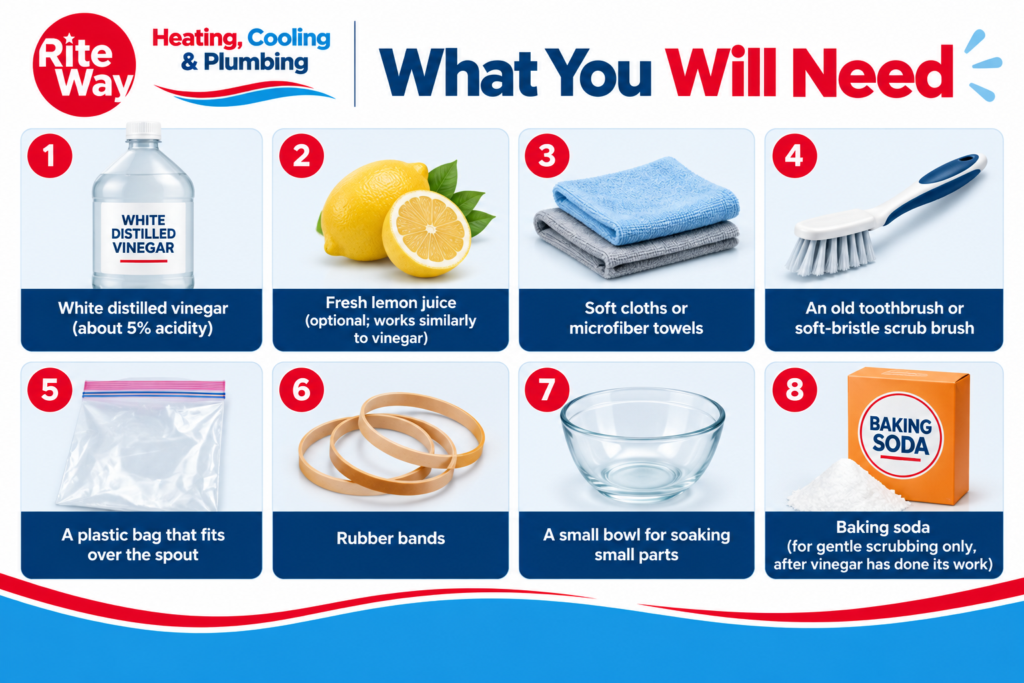
Soak a soft cloth in undiluted white vinegar or fresh lemon juice and wrap it around the affected area. Leave it in place for 20 to 30 minutes for chrome finishes, or 5 to 10 minutes for specialty finishes. Remove the cloth, scrub gently with an old toothbrush, rinse with warm water, and dry immediately with a soft cloth. Repeat if needed for heavy buildup.
Bag-and-Rubber-Band Method for Spouts and Showerheads
Fill a plastic bag with enough white vinegar to submerge the spout tip or showerhead. Secure the bag in place with rubber bands so the mineral-coated surface stays submerged. Leave for 20 to 30 minutes on chrome or 5 to 10 minutes on specialty finishes. Remove, scrub gently, rinse, and dry. This works equally well on showerheads without removing them from the wall.
Gentle Scrub for Stubborn Spots
After the vinegar has soaked and loosened the buildup, a paste of baking soda and a small amount of water applied with a soft cloth can help remove what the soak left behind. Use light pressure and a soft cloth only. Rinse thoroughly and dry. Never use abrasive powders, scrubbing pads, or steel wool on any faucet finish.
How to Clean a Clogged Faucet Aerator
Weak or uneven water flow from a kitchen or bathroom faucet is usually a clogged aerator, not a water pressure problem. The aerator is the small mesh screen screwed onto the end of the spout. Mineral deposits collect in the mesh and restrict flow over time.
- Turn off the water at the faucet handle.
- Unscrew the aerator by hand or with pliers wrapped in a cloth to protect the finish.
- Note how the parts are assembled before disassembly so you can put it back correctly.
- Soak the mesh and housing in white vinegar for 20 to 30 minutes.
- Scrub with an old toothbrush, rinse thoroughly, and reassemble.
- Screw the aerator back on and test the flow.
In Tucson, cleaning the aerator every few months or whenever flow drops is a reasonable routine given the local water hardness.
Removing Scale From Inside the Faucet
If calcium buildup affects internal parts and cleaning the exterior and aerator doesn’t resolve the issue, you may need to clean or replace the cartridge or valve seat.
Before disassembling anything, turn off the supply valves under the sink completely. Plug the drain so small parts do not fall in, and take a photo of the assembly before you start so you know how it goes back together. Soak metal parts only in white vinegar. Do not soak rubber O-rings or gaskets in vinegar, as it will degrade them and cause leaks afterward. If the cartridge shows significant corrosion or wear, replacement is usually the better option rather than cleaning.
How to Remove a Stuck Faucet Handle
A handle stuck by calcium buildup is best loosened by soaking first. Wrap a vinegar-soaked cloth around the base of the handle and leave it for 30 minutes before attempting to move it. If the handle still will not budge, a handle puller is the right tool. A handle puller is a small press or clamp device that fits around the handle and applies even upward pressure against the stem to pop it free without forcing or prying. If the handle is corroded, frozen on threads, or the puller is not making progress, stop and contact a plumber rather than risk damaging the valve body underneath. Rite Way handles faucet repair and replacement when DIY reaches its limit.
How to Keep Calcium From Coming Back
Wiping faucets and fixtures dry after each use is the simplest prevention step. It takes seconds and removes the water that would otherwise evaporate and leave minerals behind. A quick weekly vinegar wipe of visible surfaces keeps buildup from hardening between deeper cleanings.
For a longer-term solution, the source of the problem is the water itself. A traditional salt-based whole-home water softener removes the calcium and magnesium minerals that cause buildup throughout the entire plumbing system. A salt-free conditioner works differently: it changes the form of the minerals so they are less likely to stick as scale, without removing them from the water. Both options reduce buildup, but they work differently and suit different situations.
Water quality testing is the right first step before choosing a system. Rite Way tests your water and recommends the option that fits your home’s specific supply and usage. For drinking water specifically, a reverse osmosis system removes dissolved minerals at the point of use.
When It’s Time to Repair or Replace the Faucet
If cleaning removes the buildup but the faucet still drips, the handle is loose, flow is uneven after a clean aerator, or the finish is corroded beyond cosmetic cleaning, the underlying issue is usually a worn cartridge, a failing valve, or corrosion in the faucet body itself. At that point, repair or replacement is the practical next step. Rite Way handles faucet repair and replacement and can also advise on touchless faucets if you want to reduce the frequency of surface buildup going forward.
