
Repiping a house means replacing your home’s old water supply lines with new ones, usually PEX or copper, to stop recurring leaks, restore water pressure, and get rid of rusty or discolored water. A whole-house repipe is a significant project, but for many Tucson homes built before the 1980s, it is the long-term fix for aging galvanized, polybutylene, or worn-out copper pipes that no amount of spot repairs will fully resolve. Here is what the process involves, how long it typically takes, what affects the cost, and how to know if your home needs it. Rite Way’s repiping services in Tucson include a repiping consultation to help you figure out what your specific home needs.
Key Takeaways
- Repiping replaces water supply lines, not drain or sewer pipes. Each serves a different function and fails differently.
- Tucson’s median home was built in 1979. Many older homes still have original galvanized or polybutylene pipe that is past its practical lifespan.
- Most Tucson homes sit on concrete slabs, so new lines are typically rerouted through walls and the attic rather than through the slab.
- Repiping typically takes several days for a whole house, depending on size and complexity. Partial repipes are faster.
- Cost depends on home size, material choice, access and routing, wall repair, and permits. Rite Way provides honest upfront pricing before any work begins.
What Does Repiping a House Mean?
Repiping refers specifically to replacing the water supply lines, specifically the pipes that carry pressurized hot and cold water to your faucets, showers, appliances, and fixtures. It does not include drain lines or sewer pipes, which operate differently and fail for different reasons.
A whole-house repipe replaces every supply line in the home from the main shutoff to the fixtures. A partial repipe addresses one section of the system where pipes have failed or are showing early signs of trouble. Depending on the scope of the problem, one or the other may be the right answer, and a professional assessment is the most reliable way to determine which.
Signs Your House Needs to Be Repiped
A single leaking pipe or a one-time pressure problem is not necessarily a reason to repipe. The picture changes when problems are recurring or widespread.
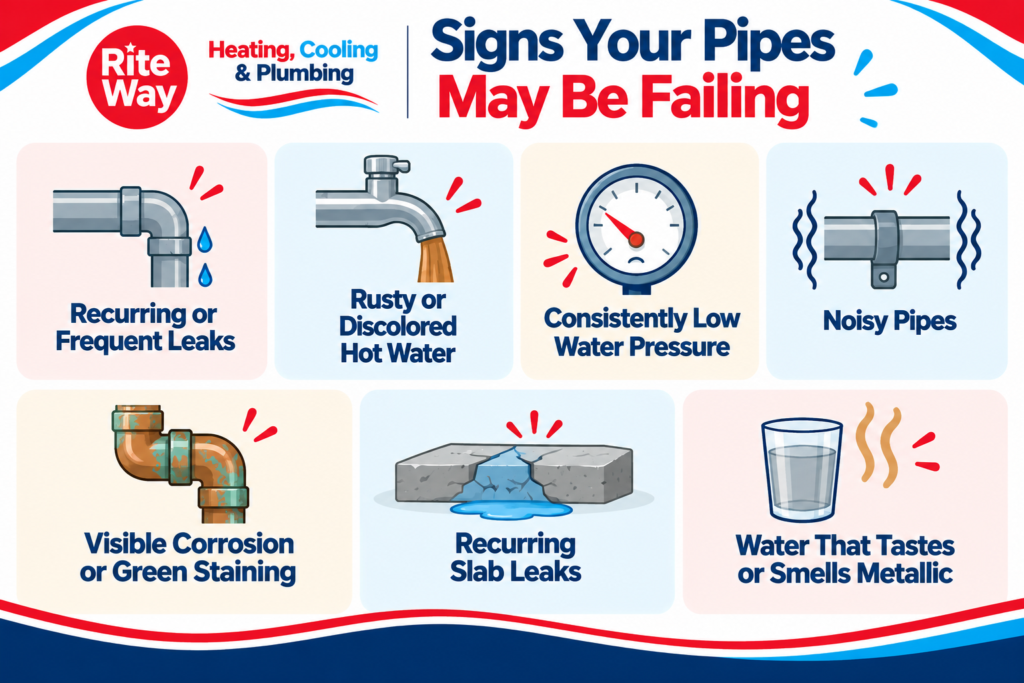
Recurring or frequent leaks: A pinhole leak that is fixed and then reappears nearby is a sign that the pipe material itself is failing rather than a single weak joint.
Rusty or discolored hot water: Brown or reddish water from the hot tap only, especially in an older home, can indicate corrosion inside the water heater or the supply lines. See our post on what affects water quality for more on what discolored water can mean.
Consistently low water pressure: Mineral buildup inside galvanized pipes narrows the interior over time, restricting flow throughout the home. This type of pressure loss does not improve with individual repairs.
Noisy pipes: Banging, rattling, or knocking when water runs or stops can indicate pipes that are corroding, poorly supported, or reacting to high pressure.
Visible corrosion or green staining: Greenish discoloration on copper fittings or orange rust on galvanized connections indicates external corrosion that often accompanies internal deterioration.
Recurring slab leaks: A slab leak that comes back after repair, or that occurs in a new location after the first is fixed, may mean the pipe material throughout the slab is failing. Rerouting the supply lines out of the slab is a long-term solution. Rite Way’s leak detection can confirm the pattern.
Water that tastes or smells metallic: This can indicate corrosion inside the pipes affecting the water supply.
Why Many Tucson Homes Are Due for a Repipe
Tucson’s median home was built in 1979. That puts a large share of the housing stock at or past the age where original pipe materials commonly begin to fail.
Homes built before the 1980s may still have original galvanized steel pipes, which corrode from the inside out as mineral deposits accumulate over decades. Galvanized pipe that has been in service for 40 or 50 years often shows significantly restricted interior diameter and active corrosion at fittings. Some homes from the same era also have polybutylene pipe, a gray plastic pipe that was widely installed through the late 1980s and is known to become brittle and fail over time.
Homes built before 1986 may also have lead solder at copper pipe joints, since the EPA banned lead from new plumbing solder in that year. Testing is the only reliable way to confirm whether lead solder is present and contributing to water quality concerns. Rite Way offers water quality testing for homeowners who want to understand what is in their water before making a decision.
Tucson’s hard water supply adds another factor. Dissolved minerals accelerate scale buildup inside pipes and can contribute to pinhole leaks in copper over time. A home that has had repeated leaks traced to the pipe material rather than specific joints or fittings is a strong candidate for evaluation.
What’s Involved in Repiping a House: Step by Step
A professional repipe follows a structured process.
Assessment and planning: The plumber inspects the existing pipes, identifies the material and condition, checks for hidden leaks, and determines the scope (whole house or partial) and which routing options.
Permits: Most whole-house repipes require permits and inspection. Rite Way handles permitting for Tucson-area projects. Permits protect you by ensuring the work is inspected and documented.
Protecting the home: Work areas are covered and furniture moved from walls before opening access.
Routing new lines: Because most Tucson homes sit on concrete slab foundations, original supply lines often run under or through the slab. New lines are typically rerouted through walls and the attic rather than broken out of the concrete. This approach avoids the disruption and expense of cutting through the slab and also addresses repeat slab leaks by moving the pipes entirely out of that environment.
Installing new pipes and reconnecting fixtures: New PEX, copper, or CPVC lines are run through the designated routes and connected to every fixture, appliance, and shutoff in the home.
Pressure testing and leak checks: After installation, the system is pressurized and checked for leaks throughout before closing any walls.
Inspection: The permit inspection is scheduled and completed, confirming the work meets code.
Wall patching: Drywall or plaster is patched and finished where walls were opened for access.
How Long Does It Take to Repipe a House?
The timeline depends on the size of the home, the number of bathrooms and fixtures, the pipe material chosen, the routing complexity, and whether any unusual access challenges exist.
A whole-house repipe on a typical single-story Tucson home generally takes several days from start to pipe installation, with wall patching and inspection adding additional time depending on the scope. A partial repipe that addresses one section of the system is considerably faster. Larger or more complex homes, homes with two stories, or projects with significant access challenges take longer.
The exact timeline for your specific project is best confirmed during the repiping consultation, where the scope and routing plan are established.
Can You Stay Home During a Repipe?
Most homeowners can remain in the home during a repipe, but there are a few practical realities to plan for.
Water is typically shut off to the sections of the house being worked on during the installation phase. Depending on how Rite Way stages the work, water may be available to parts of the home at different points during the project.
Open walls are part of the process. Expect access panels or larger openings in drywall near pipe runs, which are patched after inspection. Furniture near exterior walls and in work areas is moved at the start of the job.
Children and pets are best kept clear of the active work area during the project. If you have specific concerns about living at home during the work, discuss them during the initial consultation so Rite Way can walk you through the project staging.
PEX vs. Copper vs. CPVC
If your home is due for repiping or you are dealing with recurring leaks, one of the first decisions is what material to use. In Tucson, hard water and older housing stock both factor into that choice.
Rite Way installs all three materials and recommends based on each home’s needs and budget. Here is how they compare:
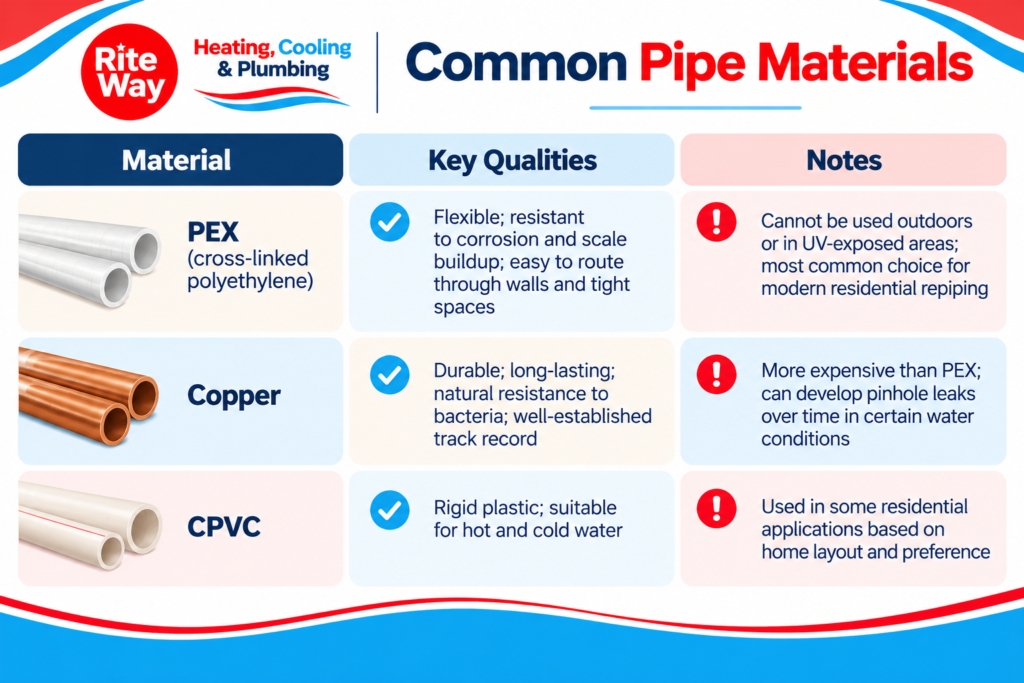
The right material for your home depends on its configuration, water conditions, and budget. A plumber who has inspected your specific pipes and routing is better positioned to advise than any general guide.
Not sure what your home currently has or what it needs? Rite Way can assess your plumbing and walk you through the options before any work begins.
What Goes into the Cost of Repiping a House?
Repiping a house involves several distinct cost components, and understanding what goes into the total helps set realistic expectations before you get an estimate.
Pipe material: PEX is typically the most cost-effective option. Copper costs more due to material pricing and the labor involved in fitting and soldering connections. CPVC falls in between. The material choice affects both the material cost and the installation time.
Home size and layout: Larger homes require more pipe, more fittings, and more labor. A three-bedroom, two-bath single-story home is a simpler scope than a larger two-story home with multiple bathrooms and a longer pipe run from the main.
Number of fixtures: Each bathroom, kitchen sink, laundry hookup, hose bib, and appliance connection adds to the scope. A home with four bathrooms costs more to repipe than one with two, even at the same square footage.
Access and routing: Single-story slab homes with straightforward attic access are generally more efficient to work in than two-story homes or properties with limited attic clearance or unusual framing. Routing complexity affects labor time significantly.
Partial vs. whole-house scope: A partial repipe addressing one problem area costs less than replacing every supply line in the home. The right scope is determined by how widespread the pipe failure is.
Wall and ceiling repair: Opening walls and ceilings for pipe access is part of the job. The extent of the drywall repair afterward depends on how many access points were needed and is part of the overall project cost.
Permits and inspections: Permit fees vary by jurisdiction and are included in the project cost for Rite Way jobs in Tucson.
Water heater and main line: If the water heater or main supply line is also being addressed as part of the project, that adds to the scope.
Rite Way provides straightforward pricing before any work begins, and financing is available for qualified homeowners.
Ready to Know What Your Home Actually Needs?
Rite Way’s licensed plumbers serve Tucson and communities throughout Southern Arizona. If you have been dealing with recurring leaks, low pressure, or aging pipes, we will assess your plumbing honestly and give you a clear picture of whether a partial or whole-house repipe makes sense, what it involves, and what it will cost before any work begins. We have been serving Arizona homeowners since 1959 and answer phones 24/7.