
Water quality is shaped by everything the water touches: the rock and soil it moves through, what washes into rivers and aquifers, how it is treated and distributed, and, finally, the pipes and appliances in your home. Some of those factors are natural, some are caused by human activity, and some are within your control as a homeowner. In Tucson, where the water supply blends groundwater with recharged Colorado River water and most homes were built before modern plumbing standards, both the source and the home itself play a meaningful role in what comes out of the tap. Here is a look at the main factors that affect your water quality, what they mean locally, and what you can do about the ones you can manage.
Key Takeaways
- Water quality is affected at three stages: the source, the utility’s treatment and distribution, and your home’s plumbing and appliances.
- Most homeowner-controllable factors are in stage three: pipe age, water heater condition, filter maintenance, and how long water sits in pipes.
- Tucson Water classifies the local supply as hard to very hard, which affects plumbing and appliances over time.
- Tucson Water publishes an annual Water Quality Report showing how the supply compares to federal and state standards.
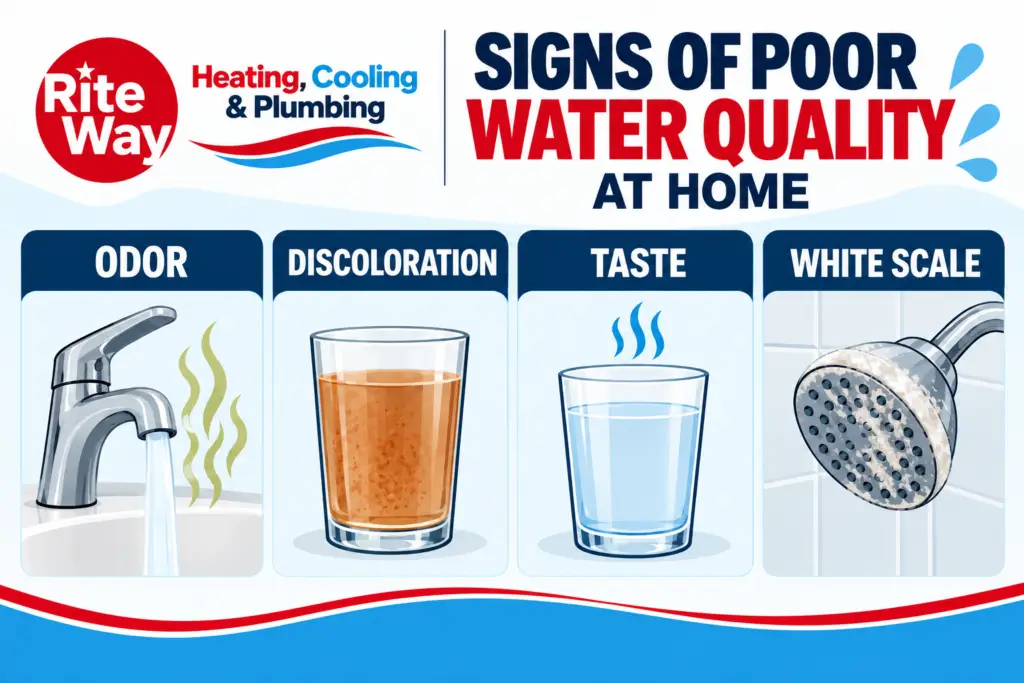
- If you notice changes in taste, odor, or color, water quality testing is the fastest way to find out what is going on.
What Are the Main Factors That Affect Water Quality?
Natural Factors
As water moves through rock and soil, it picks up dissolved minerals like calcium and magnesium (which create hardness), naturally occurring trace minerals, and in some regions, naturally elevated levels of certain substances from long-term contact with local geology. Sediment from rainfall and erosion can also enter surface water sources during storms.
Human Factors
Agricultural runoff, industrial activity, and urban stormwater all introduce contaminants into surface water and groundwater. The EPA sets legal limits on over 90 contaminants in drinking water and requires public water systems to monitor and report on them regularly. Utilities use filtration, disinfection, and pH adjustment to address many of these factors before water reaches your home.
From the Source to Your Tap
Thinking about water quality in three stages helps clarify where control lies:
- Stage 1: The source: where the water comes from and what it has contacted before treatment begins.
- Stage 2: Treatment and distribution: how the utility processes the water, what standards it must meet, and what the distribution system may add along the way.
- Stage 3: Your home: pipe age and material, water heater condition, softener and filter maintenance, and how long water sits before you use it.
Most of what a utility controls ends at stage two. Stage three is where homeowners have the most exposure and the most control.
What’s in Tucson’s Water?
Tucson Water draws from groundwater, recharged Colorado River water delivered via the Central Arizona Project, and recycled water. According to the 2025 Tucson Water Annual Water Quality Report, the supply meets or exceeds all federal and state drinking water standards. That report is published every year and is worth bookmarking if you want to see exactly how the water is tested.
The supply is classified as hard to very hard, a mineral characteristic of the local geology and source water, not a safety concern. In practice it means scale on fixtures, faster wear on water heater components, and shorter appliance lifespans if the hardness is not managed.
Something worth knowing about Tucson’s water supply is PFAS contamination in parts of the regional groundwater aquifer. PFAS, per- and polyfluoroalkyl substances, are synthetic chemicals used in products like firefighting foam and nonstick cookware. They break down very slowly in the environment, which is why they are sometimes called “forever chemicals.” In Tucson, the contamination traces to military and industrial sites near Davis-Monthan Air Force Base and the Tucson International Airport. ADEQ reports that Tucson Water has removed affected production wells from service and that the water delivered to homes continues to meet all EPA limits for PFAS. Tucson Water also applies internal targets stricter than federal requirements, and the annual Water Quality Report includes current results.
Factors Inside Your Home That Affect Water Quality
Aging Pipes and Corrosion
Tucson’s median home was built in 1979, meaning many properties still have original copper or galvanized steel lines. Galvanized pipes corrode from the inside over time, adding iron and sediment that can discolor water at the tap. The EPA notes that lead was banned from new plumbing and solder in 1986, so homes built before that date may have lead solder at joints and testing is the only way to confirm. If pipes are failing throughout the home, repiping removes the source of the problem.
Your Water Heater
Sediment from hard water accumulates at the bottom of the tank over time. Inside the tank, an anode rod made of magnesium or aluminum is designed to corrode in place of the tank walls. When the rod is fully depleted, corrosion shifts to the tank and can affect hot water color and taste. The recommended setting is 120 degrees Fahrenheit, which discourages bacterial growth without being unsafe. Rite Way’s water heater maintenance guide explains the full routine.
Water That Sits in Pipes
Water sitting in pipes for several hours can pick up minerals and trace metals from the pipe walls. After a home has been unoccupied, run the cold tap for a minute or two before using water for drinking or cooking. This matters most for Tucson-area seasonal residents returning after weeks or months away.
Softeners and Filters That Need Maintenance
An unmaintained softener or filtration system can become a problem rather than a solution. Softener resin beds need periodic regeneration and eventual replacement. Reverse osmosis membranes and pre-filters need to be changed on schedule. Follow the manufacturer’s maintenance intervals for any system in your home.
How to Find Out What’s in Your Water
Tucson Water’s annual Water Quality Report shows what the utility delivers. It is published each year on the Tucson Water website.
For what is happening inside your own plumbing, a water quality test is the most direct answer. Rite Way offers water quality testing and a free water test before recommending any softener or filtration system, so you know what you are addressing before purchasing anything.
Homes on private wells, common in outlying areas of Southern Arizona including parts of Marana, the Tucson foothills, and Green Valley, are not covered by utility monitoring. Well owners must test their own water regularly.
How to Improve Water Quality in Your Home
- Water softeners: A salt-based whole-home water softener removes the calcium and magnesium that cause hardness, reducing scale and protecting water heater components. A salt-free conditioner changes the physical form of the minerals so they are less likely to stick as scale, without removing them. Rite Way tests your water first and recommends based on what it shows.
- Reverse osmosis: A reverse osmosis system filters water through a fine membrane that removes dissolved minerals and other contaminants at the point of use, typically under the kitchen sink. It addresses different concerns from a softener and the two are often paired.
- Water filtration: Rite Way’s water filtration options cover whole-home and point-of-use systems depending on what your test shows.
- Water heater service: Flushing sediment, evaluating the anode rod, and maintaining the correct temperature are the most effective steps for Tucson homeowners dealing with hard water. See Rite Way’s water heater installation and replacement page when a new unit is needed.
- Repiping: When aging pipes are affecting water quality throughout the home, repiping addresses the root cause.
Not Sure Where to Start? Rite Way Can Help.
Rite Way’s licensed plumbers and water treatment specialists serve Tucson and communities across Southern Arizona. If you have noticed changes in your water’s taste, odor, or appearance, or simply want to understand your supply before making any decisions, we offer water quality testing and a free assessment before recommending anything. We’ve served Arizona homeowners since 1959 and answer phones 24/7.
