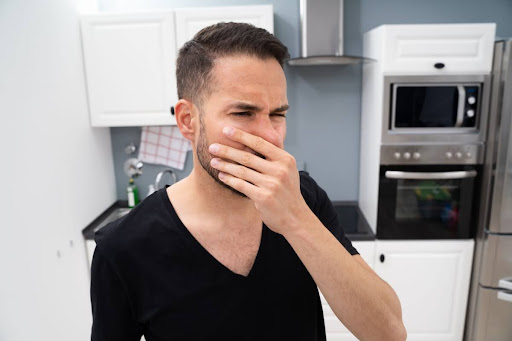
That rotten egg smell coming from your drain is almost always hydrogen sulfide gas, produced by bacteria feeding on buildup inside the pipe or drain components. It is a common complaint in Tucson and Phoenix homes, where hard water leaves mineral deposits that give bacteria more to work with, and where the hot, dry climate can dry out the water traps that normally block sewer gases from entering the home. Most causes are easy to identify once you know where to look, and many fixes take just a few minutes.
Key Takeaways
- The smell is almost always hydrogen sulfide from bacteria, a dry P-trap, or a sewer gas issue.
- Natural gas is scented to smell like rotten eggs. If the smell is not coming from a drain, treat it as a gas leak.
- Hot-water-only odor usually points to the water heater, not the drain.
- In Southern Arizona’s dry climate, unused drains lose their trap water faster and need to be run regularly.
- If the smell returns within days of cleaning, something deeper needs professional attention.
Find the Source: A 2-Minute Smell Test

Narrowing down the source before you start cleaning tells you what actually needs to be done.
- One drain or all of them? If the smell comes from a single sink or shower, the issue is local: buildup, a dry trap, or the disposal. If every drain smells, it is likely the sewer line or a blocked vent.
- Hot water only, or cold too? Fill two separate glasses away from the sink, one hot and one cold. If only the hot glass smells, the water heater is the most likely source. If both smell, the issue may be the water supply, particularly on a private well.
- Near the toilet base? A sewer smell at floor level around the toilet points to a failing wax ring rather than the drain itself.
- Not near any drain? See the safety note above.
Safety note: Could it be natural gas?
Natural gas is scented to smell like rotten eggs. If the smell is strong, not coming from a drain, or is near a gas water heater, stove, or furnace, do not flip switches or use any flame. Leave immediately and call 911 and Southwest Gas from outside.
Why Your Drain Smells Like Rotten Eggs
Buildup in the Drain or Pipes
Hair, soap, grease, and food debris accumulate inside drains and become a food source for bacteria. As those bacteria break down organic matter, they produce hydrogen sulfide. This is the most common cause, particularly in kitchen sinks and bathroom drains that see heavy daily use.
A Dry P-Trap
The P-trap is the curved pipe section beneath every drain. It holds a small amount of water that blocks sewer gas from traveling up into the room. When a drain goes unused, that water evaporates and the smell comes straight through. Running water in the drain for thirty seconds usually fixes it right away.
A Blocked or Damaged Sewer Vent
Your drain system uses a vent pipe through the roof to release sewer gases safely outside. A blocked or damaged vent causes gases to back up into the home, typically affecting multiple drains at once. Clearing a roof vent requires roof access and is a job for a licensed plumber.
A Water Heater Anode Rod
Hot-water-only odor almost always traces to bacteria reacting with the anode rod inside the tank. Flushing, disinfecting the tank, or evaluating the rod type are the usual next steps. Homes with water softeners may notice this more often. Rite Way handles water heater repair and can advise after inspection. Our water heater maintenance guide explains how the anode rod works and what to watch for.
The Garbage Disposal
Food debris that collects inside the disposal housing and under the splash guard is a common bacteria source, especially after a few days of no use. Cleaning under the splash guard, running ice and a cut lemon through the disposal, and flushing the drain usually clears it. For persistent problems, Rite Way handles garbage disposal repair and installation.
A Failing Toilet Wax Ring
A sewer smell at floor level around the toilet base can indicate a failing wax ring seal. When the seal deteriorates, sewer gas escapes at floor level rather than through the drain. Rite Way handles toilet repair and replacement if this turns out to be the source.
Why Dry Drains Are Common in Southern Arizona Homes
In most climates, P-traps stay full because drains get regular use year-round. Two things change that in Southern Arizona.
First, the hot, dry air accelerates evaporation in unused drains. Guest bathrooms, utility sinks, laundry floor drains, and outdoor utility drains can lose their trap water faster than they would in a humid climate, leaving a direct path for sewer gas into the living space.
Second, many communities in Rite Way’s service area, including Green Valley, Saddlebrooke, and similar areas near Tucson, have many seasonal residents. Coming home after a few months away to a sewer smell throughout the house is common, and in most cases, running every drain for thirty seconds resolves it immediately. For longer absences, asking a neighbor to run the taps periodically or pouring a small amount of water into floor drains before you leave keeps the traps full through the season.
How to Get Rid of the Rotten Egg Smell
For most drain odors, work through these steps first:
- Run water in unused drains. If the cause is a dry trap, thirty seconds of running water is the fix.
- Clean the drain. Pour half a cup of baking soda into the drain, follow with half a cup of white vinegar, wait fifteen minutes, then flush with hot water.
- Clean the garbage disposal. Run ice and a cut lemon through the unit, then scrub under the splash guard with a brush.
- Use an enzyme drain cleaner. Enzyme-based products break down organic buildup without damaging pipes and are better for regular maintenance than harsh chemical cleaners.
- Run water in every drain monthly. In Arizona’s dry climate this is straightforward preventive maintenance, especially for guest baths and utility drains.
If the smell returns within a day or two of cleaning, something deeper needs attention.
Well Water and Septic Homes
Outlying homes in Southern Arizona on private wells sometimes have naturally sulfur-smelling water. If both hot and cold water have the smell and standard fixes have not helped, the source may be the water supply rather than the plumbing. Rite Way offers water quality testing and water treatment options to address this.
For homes on septic systems, a persistent sewer smell inside can occasionally point to a septic concern rather than indoor plumbing. Rite Way’s septic services cover pumping, inspection, and repair if that turns out to be the cause.
When to Call a Professional
The DIY steps above handle most rotten egg drain smells. But some causes go beyond what cleaning can fix, and continuing to treat the symptom without addressing the root issue means the smell keeps coming back.
A sewer camera inspection is often the fastest way to get a definitive answer when the cause is not obvious. Rather than guessing whether the issue is buildup deep in the line, a crack in the sewer pipe, or a blocked vent, a camera confirms what is actually going on and where, so the repair is targeted rather than exploratory. Rite Way offers sewer camera inspection for exactly this kind of situation.
For significant buildup inside drain or sewer lines, hydro jetting clears blockages more thoroughly than a standard snake by using high-pressure water to scour the pipe walls. It is particularly effective in older Tucson homes where years of hard water deposits and organic buildup have narrowed the line. Standard drain cleaning handles less severe cases.
If the sewer line itself is the source, whether from a crack, a root intrusion, or a failing section of pipe, sewer line repair addresses the issue at the source rather than managing symptoms.
Call sooner rather than later when:
- The smell returns within a few days of cleaning
- Every drain in the house smells at the same time
- Slow drains are accompanying the smell throughout the house
- The smell appears to come from around the toilet base
- Hot water is the source and flushing the tank has not helped
- You suspect a blocked or damaged vent pipe
Ready to Find the Source for Good?
Rite Way’s licensed plumbers serve Tucson and communities throughout Southern Arizona. If the smell keeps coming back or you are not sure what is causing it, we can find the source and fix it right the first time. We answer phones 24/7 and have been serving Arizona homeowners since 1959.