
A toilet flange is the round fitting on the floor that connects your toilet to the drain pipe and anchors it in place. It works with the wax ring to keep water and sewer gas sealed inside the drain. When a flange cracks, sits too low, or comes loose from the floor, you will usually notice a rocking toilet, water around the base, or a persistent sewer smell. In Tucson, where most homes sit on concrete slabs and many have decades-old plumbing, flange problems deserve quick attention. Leaks that would drip into a basement in other climates spread silently under a slab floor here. Here is how a toilet flange works, the signs it needs attention, your repair options, and when it is time to let a Rite Way plumber handle it.
Key Takeaways
- A toilet flange connects the toilet to the drain and holds it to the floor. The wax ring seals the connection.
- Most base leaks come from a failed wax ring, but a broken or low flange can cause the same symptoms.
- Repair rings and spacers can fix many flange problems without full replacement.
- On slab floors common in Tucson, leaks can spread under the flooring and go unnoticed.
- If the toilet still rocks after a new wax ring, have a plumber check the flange.
What Is a Toilet Flange?
Also called a closet flange, a toilet flange is a round fitting with a flat ring on top and a pipe connection below. The flat ring has slots on two sides where the toilet bolts (also called closet bolts or T-bolts) slide in and hold the toilet down. The pipe below connects directly to the drain line.
The flange should sit level with or slightly above the finished floor so the wax ring compresses properly when you set the toilet. The wax ring creates an airtight, watertight seal between the bottom of the toilet and the flange. Both components do their job as long as the toilet does not move and nothing leaks.
When a flange cracks, corrodes, or drops below the floor level, the seal fails. The toilet may rock, water may seep out during flushing, and sewer gas can escape into the bathroom.
Types of Toilet Flanges
Flanges are made to match the drain pipe material in the home. The most common options:
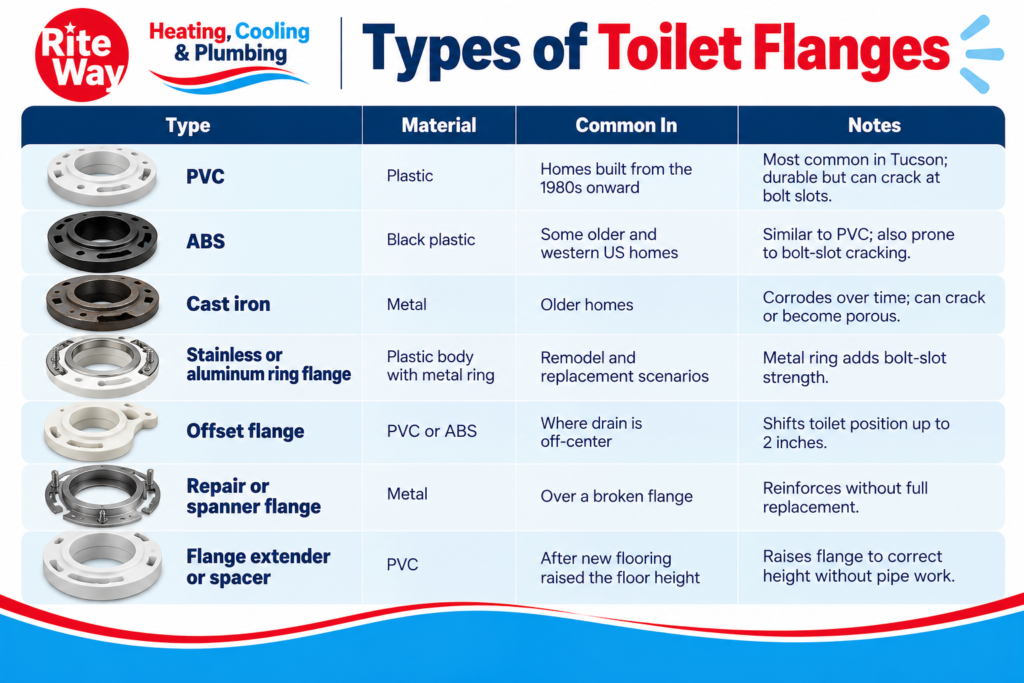
Tucson homes built in the 1970s and earlier may have cast iron flanges on cast iron or clay drain lines. Homes built from the 1980s forward are more likely to have PVC. If you are not sure what you have, a plumber can confirm before any repair work begins.
Signs Your Toilet Flange Is Damaged
Rocking or Loose Toilet
A toilet that rocks side to side or front to back either has loose bolts, a failed wax ring, or a broken flange. Tighten the bolt caps first and see if the movement stops. If the toilet still moves, something below the surface needs attention.
Water Around the Base
Water appearing at the base of the toilet after flushing is one of the clearest signs of a failed seal. The source could be the wax ring, the flange, or both. Do not ignore it. Even a slow leak causes floor damage and mold over time.
Sewer Smell in the Bathroom
A sewer smell that persists even when the toilet is clean points to a break in the seal between the toilet and the drain. A cracked or low flange allows gas to escape. If the smell continues after a new wax ring, the flange itself may be the problem. For related odor causes, see our post on why your drain smells like rotten eggs.
Stained, Soft, or Discolored Flooring
Water damage around the toilet base, including warped vinyl, stained grout, or soft spots in the subfloor or tile, indicates a leak that has been going on for some time. The visible damage is often just the surface of a larger problem below.
Toilet Bolts That Will Not Stay Tight
If the toilet bolts loosen quickly after tightening, or if the bolts spin without catching, the bolt slots in the flange may be cracked or broken. This is one of the most common flange failures, particularly in plastic flanges.
Seeing more than one of these signs? A Rite Way plumber can pull the toilet, inspect the flange and wax ring, and fix the real problem instead of guessing from the surface.
Is It the Flange or the Wax Ring?
The wax ring and the toilet flange produce the same visible symptoms when they fail. Here is a simple way to think through which is more likely the cause:
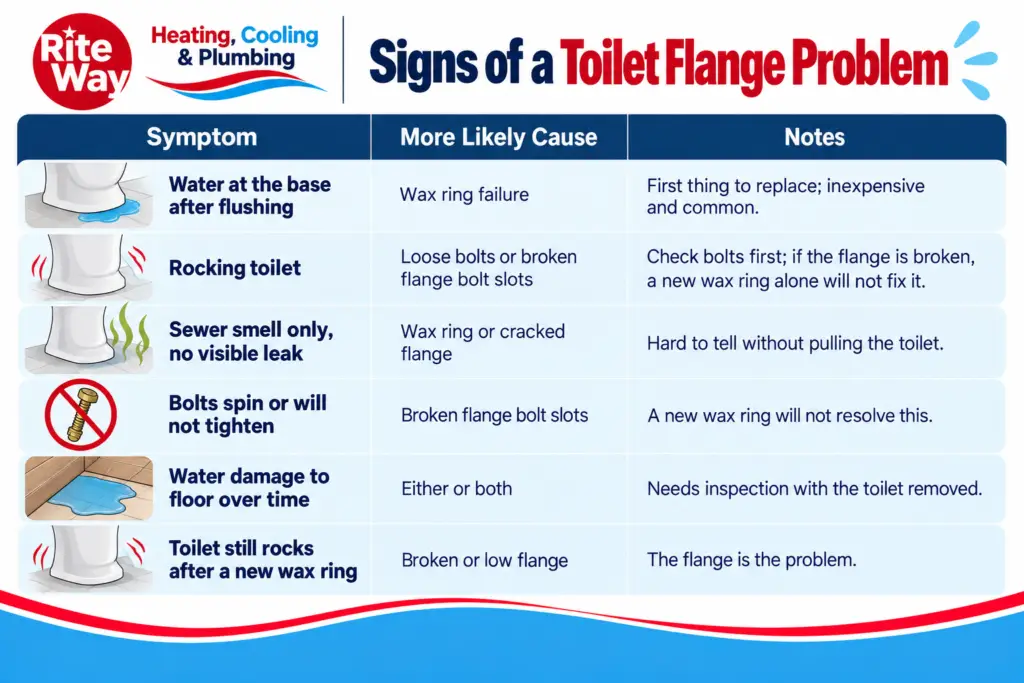
The only way to know for certain is to pull the toilet and look. If you have replaced the wax ring and the problem returned, the flange is the next thing to inspect.
Common Toilet Flange Problems
Broken or Cracked Flange
The most common failure point is the bolt slot area on plastic flanges. A crack here means the bolts have nothing solid to grip and the toilet will not stay anchored. The flange may otherwise be intact, which means a repair ring or spanner flange can often fix it without replacing the whole flange.
Flange Too Low After New Flooring
When new tile or flooring is installed over the original floor, the finished floor height rises but the flange does not. A flange that sits below the floor level cannot compress the wax ring properly, leading to leaks and odors. A flange extender or spacer raises the height without cutting into the pipe. This is one of the most common flange calls after bathroom remodels in Tucson.
Corroded Cast Iron Flange
Older Tucson homes with cast iron plumbing may have flanges that have corroded over decades. Cast iron flanges can crack, crumble at the bolt slots, or become porous enough to allow gas and water to escape even without a visible crack. These typically need full replacement.
Flange Loose From the Floor
On concrete slab floors, flanges are anchored with masonry fasteners. If those fasteners loosen or the concrete around them deteriorates, the flange can shift when the toilet is used. Re-anchoring to concrete is a different process than anchoring to wood subfloor and is worth having a plumber handle.
Why Flange Leaks Are Sneaky on Slab Floors
Most Tucson homes are built on concrete slabs with no basement or crawlspace for water to drip into. When a flange leaks in a slab home, water spreads under the floor instead of dripping to a visible location below. It can saturate tile adhesive, soften grout, travel along the slab surface, and damage flooring well beyond the toilet before any signs appear at the surface.
By the time you notice soft flooring, a musty smell, or water staining away from the toilet, the damage may already be significant. If you suspect a flange leak has been going on for a while, Rite Way’s leak detection can locate water under concrete without tearing up your floor.
Repair or Replace a Toilet Flange?
Not every flange problem requires full replacement. Here are the most common fixes:
Repair ring or spanner flange: A metal repair ring slides over a cracked or broken flange and gives the bolts fresh, solid anchor points. Works when the flange body and its connection to the drain pipe are still intact. This is a common fix for plastic flanges with broken bolt slots.
Flange extender or spacer: A plastic ring that stacks on top of a low flange to raise it to the correct height after new flooring. No pipe work required in most cases.
New bolts: Sometimes the issue is the hardware alone. New bolts are inexpensive and worth trying if the flange itself looks solid.
Full flange replacement: Necessary when the flange is cracked through the body, corroded, or the connection to the drain pipe below is damaged. This requires disconnecting the drain pipe, which on a slab may involve working around or into concrete.
Pulling and resetting a toilet is manageable for a confident homeowner on a wood-frame floor with an intact drain pipe. On a concrete slab, or when the drain pipe below is damaged, a licensed plumber should handle the job. Rite Way gives honest guidance on repair versus replacement and will tell you directly what the flange and toilet actually need.
Not sure if it is the flange, the wax ring, or the toilet itself? Rite Way will tell you straight and fix it the same visit. Toilet repair and replacement in Tucson.
When to Call a Plumber
Call a plumber rather than attempting the repair yourself when:
- The toilet still rocks after a new wax ring
- The flange is cracked through the body, not just at the bolt slots
- The flange sits on a concrete slab and the drain pipe connection is damaged
- The cast iron flange is corroded or crumbling
- Water has been leaking for an unknown period and the floor may be compromised
- A sewer smell persists after replacing the seal
- Water is spreading across the floor right now
For active leaks, Rite Way’s 24/7 emergency plumbing is available around the clock. If the sewer smell continues even after the flange and wax ring are confirmed good, a sewer camera inspection can check for issues further down the line.
Ready to Stop Guessing? Rite Way Can Help.
Rite Way’s licensed plumbers serve Tucson and communities across Southern Arizona. Whether it is a rocking toilet, water at the base, or a sewer smell that will not go away, we pull the toilet, find the actual cause, and fix it right. We typically complete toilet repair and replacement in a few hours. We have been serving Arizona homeowners since 1959 and answer phones 24/7.