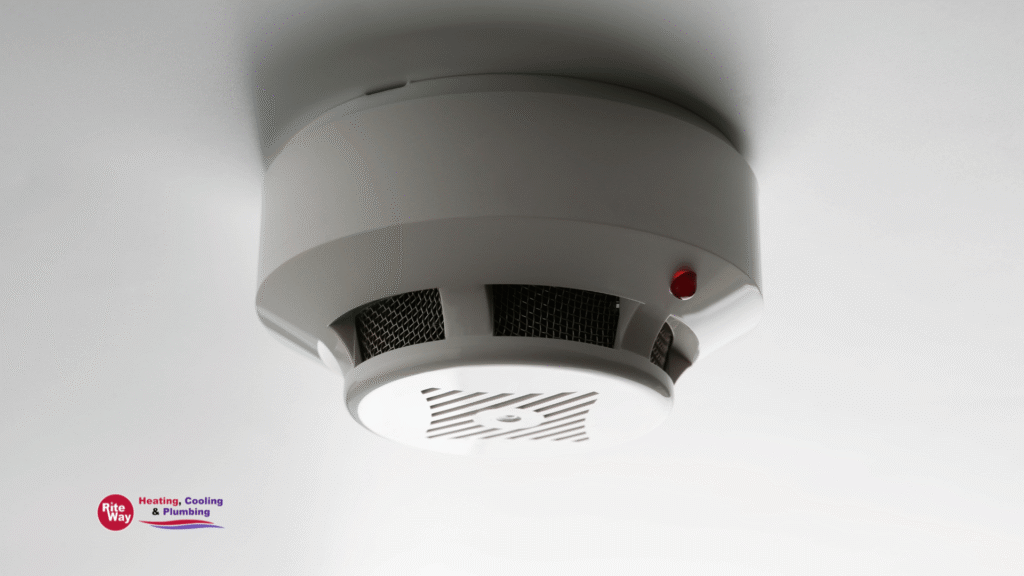
A smoke detector beeping once every 30 to 60 seconds almost always means the battery is low or the unit has reached the end of its 10-year lifespan. A chirp that continues after a fresh battery change usually signals an aging unit that needs replacing, not another new battery.
In Tucson, the cause is not always that simple. Desert dust from haboobs and monsoon events can enter detector chambers and trigger chronic chirping, and summer attic temperatures that routinely exceed what most detectors are rated to handle can cause false alarms that have nothing to do with smoke. This guide covers what each beep pattern means, the six most common causes, and when the right answer is a new battery versus a new unit versus a call to a licensed electrician.
Key Takeaways:
- A single chirp every 30 to 60 seconds is a maintenance alert, not an emergency. It almost always means a low battery or an end-of-life unit.
- Smoke detectors must be replaced every 10 years from the manufacture date on the back of the unit. A chirp after a fresh battery almost always means the unit has hit this limit.
- Three beeps and four beeps are emergency signals. Evacuate immediately and do not stop to troubleshoot.
- In Tucson, desert dust and extreme attic heat cause false alarms and chronic chirping at higher rates than in most U.S. cities.
- Battery-operated detectors are a DIY replacement. Hard-wired detectors require a licensed electrician.
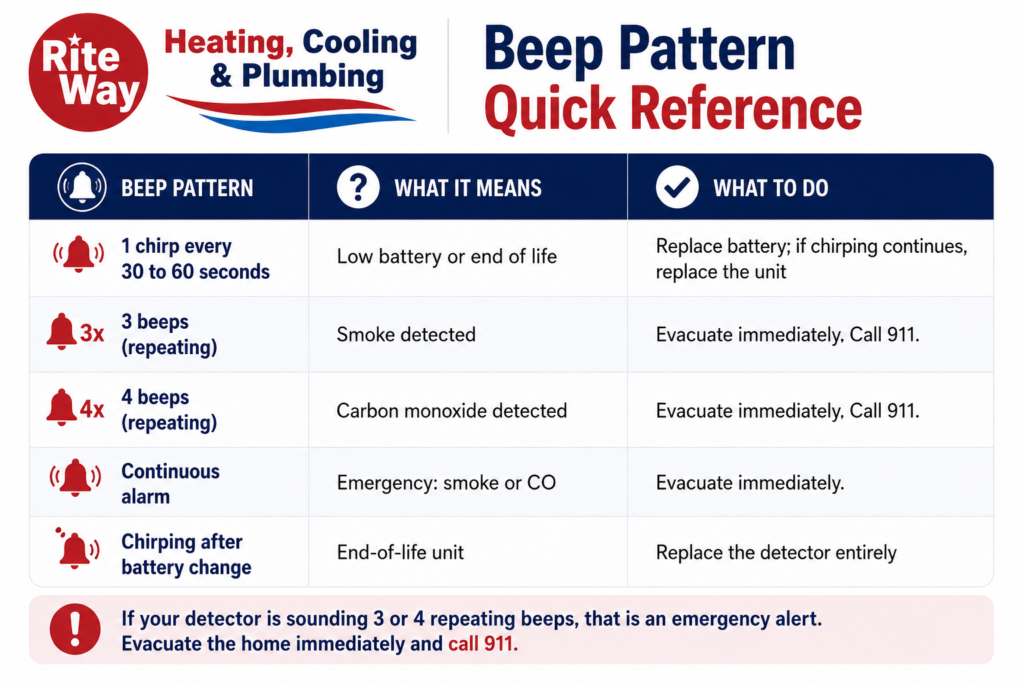
What the Beep Patterns Mean
The single chirp is a maintenance alert, not an emergency. The 3-beep and 4-beep patterns are different entirely. Three repeating beeps signal smoke. Four repeating beeps signal carbon monoxide. Both require immediate evacuation. Do not silence these alarms, remove the battery, or assume a false alarm until the fire department has confirmed the space is safe.
6 Reasons Your Smoke Detector Is Beeping
1. Low Battery
When the battery drops below the threshold needed to power the unit reliably, the detector chirps as a warning. Open the battery compartment, install a fresh battery (usually a 9V or AA), and press and hold the test button for 5 to 10 seconds to reset. Do not remove the battery without replacing it the same day. A detector with no battery provides no protection.
Fix: DIY.
2. End-of-Life Unit
If chirping continues after a fresh battery, the unit has almost certainly reached the end of its service life. The National Fire Protection Association requires smoke alarms to be replaced every 10 years from the manufacture date, which is printed on the back of the unit. After a decade, the internal sensors degrade. No battery will fix that.
Check the manufacture date before anything else. If it is more than 10 years old, replace the unit.
Fix: Replace the detector. Battery-operated units are a DIY swap. Hard-wired units require a licensed electrician.
3. Dust or Insects in the Sensor Chamber
Ionization-type smoke detectors use a small ionized air chamber to detect smoke particles. Dust and insects that enter this chamber can disrupt the ionization and trigger false alarms or chronic chirping.
In Tucson, haboobs and monsoon dust storms deposit fine desert particulate throughout homes, including inside ceiling-mounted detector chambers. A detector that starts chirping in the days after a significant dust event is often responding to particulates in the chamber. Clean it with compressed air, reinstall, and press and hold the test button to reset.
Fix: DIY. If false alarms continue after cleaning, replace the unit.
4. Extreme Heat
Most residential smoke detectors are rated to operate up to 100 degrees Fahrenheit. Tucson attics and garages regularly exceed 130 to 150 degrees in summer. A detector mounted near an attic access hatch, in a garage, or beneath a poorly insulated ceiling can malfunction or false-alarm from heat stress alone.
If a specific detector chirps only during the hottest part of the day, heat is likely the cause. The fix is relocating the unit, not replacing the battery.
Fix: Battery-operated units can be relocated by the homeowner. Hard-wired units require a licensed electrician to move.
5. Steam or Cooking Fumes
A detector mounted too close to a bathroom or kitchen can false-alarm from steam, cooking smoke, or aerosols. The NFPA recommends installing smoke alarms at least 10 feet from cooking appliances where possible. If relocation is not practical, a photoelectric-type detector is generally less reactive to cooking particles than an ionization-type unit.
Fix: Relocate the unit if possible. Hard-wired units require an electrician.
6. Hard-Wired Power Issue
Hard-wired smoke detectors draw power from your home’s electrical system and use a backup battery for outages. If the AC power connection is interrupted (a tripped breaker, a loose wire, or an electrical fault), the unit falls back to battery and may chirp to signal the loss of primary power. A fresh backup battery will not resolve a wiring issue.
Fix: Call a licensed electrician.
When to Replace Instead of Fix
Replace your smoke detector if:
- The manufacture date is more than 10 years ago.
- Chirping continues after a fresh battery and cleaning.
- The unit produces repeated false alarms despite cleaning and correct placement.
- The unit was exposed to smoke from an actual fire.
- The unit is physically damaged.
Hard-Wired Smoke Detectors: When to Call Rite Way
Battery-operated smoke detectors are a straightforward DIY replacement. Hard-wired detectors are connected to your home’s electrical system and are typically interconnected with every other detector in the home. Replacing one requires disconnecting it safely from the circuit, installing the replacement correctly, and verifying that the interconnection still functions across all units. That is not a DIY repair.
Rite Way’s licensed electricians handle hard-wired smoke detector replacement and installation throughout Tucson.
Smoke Detector FAQs
A single chirp every 30 to 60 seconds almost always means the battery is low. Replace it and press and hold the test button to reset. If chirping continues, check the manufacture date on the back, if the unit is more than 10 years old, replace it entirely.
The unit has almost certainly reached the end of its 10-year service life. The manufacture date is on the back of the detecting because after a decade, the sensors degrade and the unit chirps regardless of battery condition. A new battery will not fix it.
The most common causes are steam from a shower or kitchen, dust in the sensor chamber, or heat from a poorly insulated ceiling. Clean the chamber with compressed air and check the manufacture date. If the unit is 10 or more years old, replace it.
Battery-operated detectors yes. Hard-wired detectors are connected to your home’s electrical system and interconnected with other units throughout the home. Replacing them requires a licensed electrician to ensure the wiring and interconnection are correct.
Three repeating beeps mean the detector has sensed smoke. Evacuate immediately, close doors behind you, and call 911 from outside.
Locate the chirping unit, replace the battery, and press and hold the test button to reset. If it chirps again after a fresh battery, the unit is past its 10-year life and needs to be replaced.
Every 10 years from the manufacture date per NFPA guidelines. In Tucson, detectors near attic spaces or in high-dust areas may need more frequent attention, but the 10-year rule applies regardless.
A chirp is a single beep every 30 to 60 seconds signaling a maintenance issue. A full alarm is loud, continuous, or rapidly repeating and signals detect smoke or carbon monoxide. Chirps do not require evacuation, full alarms do.