A sputtering faucet isn’t just inconvenient; it can also signal that something is wrong with your plumbing system. The good news? You might be able to fix the issue without calling a plumber. The bad news? Ignoring it could lead to bigger problems down the road.
If you’ve been dealing with a faucet that seems to have a mind of its own, you’re in the right place. Here are five common reasons your faucet is sputtering water and what you can do about them.
Key Takeaways:
- The first question to ask is whether one faucet is sputtering or all of them. The answer points to completely different causes and fixes.
- A clogged aerator from mineral buildup is the most common cause of single-faucet sputtering and one of the easiest DIY fixes.
- In Tucson, hard water from the municipal supply means aerators accumulate scale significantly faster than in soft-water cities. Plan to clean yours every 1 to 2 months, not annually.
- If all faucets in the home are sputtering at once, the problem is almost certainly in the main supply line or pressure regulator, not the faucet itself.
- A damaged valve cartridge or water heater issue can also cause sputtering that is isolated to hot water or a specific fixture.
What Causes a Sputtering Faucet?
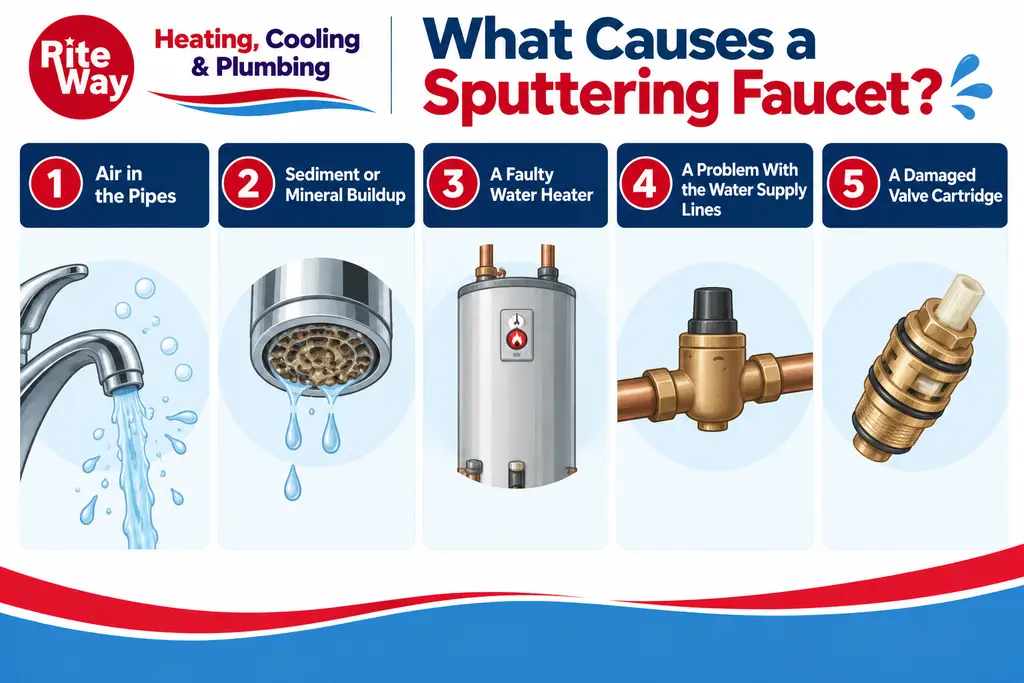
Faucet sputtering is usually caused by air trapped in the pipes, a clogged aerator from mineral buildup, a water heater issue, or a worn valve cartridge. A useful first question: is just one faucet sputtering, or all of them? If it’s one faucet, start with the aerator. If all faucets sputter at once, the problem is likely in the main supply line or pressure regulator. Here are the five most common causes and what to do about each.
1. Air in the Pipes
One of the most common culprits behind a sputtering faucet is air trapped in the pipes. This can happen after plumbing work, if there’s been a temporary shutoff in your main water supply lines, or even due to freezing temperatures affecting your water pipes.
When air pockets get into the plumbing system, they can cause an uneven water flow, making your faucet spurt and spit instead of delivering a steady stream. You might hear a gurgling sound or notice bursts of water coming out before the flow evens out.
How to Fix It
Try turning on all the faucets in your home, starting with the highest one (like an upstairs sink) and working your way down to the lowest. Let them run for a couple of minutes to help push the trapped air out of the system. If the problem persists, you might have a more significant issue with your water supply lines and may need a qualified plumber to take a closer look.
2. Sediment or Mineral Buildup
If you have hard water, your plumbing system is more likely to experience mineral buildup over time. Small bits of debris, like sand, dirt, or tiny pieces of rust, can also get into your water supply and clog up different parts of your sink faucet.
This buildup can collect in the faucet aerator, which is the small device located at the tip of the faucet spout. When the aerator gets clogged, it can disrupt the flow of water, causing sputtering, uneven pressure, or even a slow trickle.
How to Fix It
When you find your kitchen faucet sputtering, you can try unscrewing the faucet aerator and soaking it in soapy water or vinegar to break down the mineral deposits. If it’s really clogged, you may need to replace it. Most hardware stores sell aerator replacements, and they’re pretty inexpensive.
In Tucson, where municipal water runs hard, aerators accumulate mineral scale significantly faster than in soft-water cities. If you’re in Tucson, cleaning or inspecting your aerator every 1 to 2 months during heavy use periods is a better interval than the standard annual recommendation.
If you’re dealing with frequent mineral buildup, you might want to consider installing a water filtration system to improve your home’s water quality. Call Rite Way to schedule your water filtration installation in Tucson, AZ, or one of the surrounding areas.
3. A Faulty Water Heater
If your kitchen faucet is sputtering only when you turn on the hot water, the issue could be with your water heater rather than the faucet itself. Sediment buildup inside the hot water tank can cause blockages, leading to a sputtering kitchen sink or inconsistent pressure.
Over time, minerals from the water settle at the bottom of the tank, which can impact the flow of water and create air pockets. This often leads to sputtering water when you turn on the hot water taps.
How to Fix It
Try flushing your water heater to remove any sediment buildup. If the problem continues, there could be a more serious issue, such as a damaged valve cartridge or malfunctioning water heater. In that case, it’s best to call a professional plumber to inspect the unit.
4. A Problem With the Water Supply Lines
If your sink faucet is sputtering and you’ve ruled out air pockets or clogged aerators, the issue could be with your main water supply lines.
Cracks, leaks, or blockages in the pipes can disrupt the water flow, causing uneven pressure or sputtering sink issues. Damage to underground pipes can be caused by shifting soil or corrosion over time.
Another possibility? A faulty pressure regulator. If your home has one, it controls the water pressure coming from the city’s supply. If it’s not working properly, it can cause low water pressure, sputtering faucets, or even sudden pressure surges.
How to Fix It
Check if all the faucets in your home are sputtering. If so, the problem is likely coming from the main water line or water supply rather than a single fixture.
If you suspect a pressure regulator issue, it may need adjusting or replacing. A simple test you can do is attach a pressure gauge (found at any hardware store) to an outdoor spigot and check the reading. If it’s too high or low, a plumber can help fix the problem before it causes further damage to your plumbing.
5. A Damaged Valve Cartridge
Most kitchen faucets and bathroom sinks have a valve cartridge inside the handle, which helps regulate water flow and water pressure. Over time, these cartridges can wear out, get clogged with debris, or break, leading to a sputtering faucet or leaks.
If you notice the issue happens when switching between hot and cold water taps, a worn-out valve cartridge could be to blame.
How to Fix It
Turn off the water supply to the sink, remove the faucet handle, and inspect the valve cartridge for signs of wear or clogging. If it’s dirty, try cleaning it. If it looks damaged, replacing it should fix the issue.
At Rite Way, our professional plumbers in Tucson, AZ, can replace the damaged valve cartridge quickly and make sure there aren’t any other underlying issues.
Call Rite Way for Professional Plumbing Help in Tucson, AZ!
When you discover your kitchen sink sputtering, this can be a sign of something bigger happening in your plumbing system. If you’ve tried troubleshooting the issue and the problem persists, it’s time to bring in the pros.
At Rite Way, our team of qualified plumbers can diagnose the underlying cause of your sputtering kitchen sink, fix leaks, and prevent further damage to your home’s water pipes. Contact us today to schedule your plumbing services in Tucson, AZ, or one of the nearby areas!
Faucet Sputtering FAQs
A sudden onset is most often caused by air that entered the pipes after nearby plumbing work, a temporary shutoff of the main water supply, or a pressure drop from the utility. Try running all faucets from highest to lowest point in the home for a couple of minutes to push the air through.
Not always, as most faucet sputtering is caused by a clogged aerator or air in the pipes, both easy fixes. It becomes more concerning when all faucets sputter simultaneously, when you notice whole-home pressure loss, or when sputtering is accompanied by discolored water.
Unscrew the aerator from the tip of the faucet spout (it usually turns counterclockwise), rinse it to remove loose debris, then soak it in white vinegar for 15 to 30 minutes. Scrub remaining buildup with a soft brush and reinstall. If the mesh is damaged, replacement is inexpensive at any hardware store.
When sputtering only occurs on the hot side, the most likely cause is sediment buildup inside the water heater creating air pockets or blocking flow. Try flushing the water heater, and if the problem continues, a damaged valve cartridge or a failing water heater may be the cause.
Attach a pressure gauge to an outdoor hose bib and check the reading. Normal residential water pressure runs between 40 and 80 PSI and if your reading is significantly outside that range, the pressure regulator may need adjustment or replacement.
Yes, and it is one of the more common causes we see here because Tucson’s water carries significant mineral hardness that builds scale on aerators and inside valve cartridges faster than in soft-water cities. If your faucet sputters and you haven’t cleaned the aerator recently, that is almost always the first thing to check.
For short-term use, yes but a sputtering faucet that goes unaddressed can indicate a worsening aerator blockage, a developing leak, or a pressure issue that stresses the plumbing system over time. It is worth diagnosing rather than ignoring.
Call a plumber if cleaning the aerator and running water to clear air does not resolve the issue, if all faucets in the home are sputtering at once, if you notice pressure drops or discolored water alongside the sputtering, or if you suspect a damaged cartridge or supply line issue.