In a city where a significant portion of the housing stock dates to the 1970s and earlier, where hard water quietly corrodes pipes from the inside, and where monsoon season puts cyclic stress on supply lines running under concrete slabs, hidden water leaks are more common than most Tucson homeowners expect. The problem is that they rarely announce themselves. A pinhole leak in a copper supply line, a failing flapper in a toilet tank, or a hot water line that has breached under the foundation can run for weeks or months before anything visible appears. By then, the water damage, mold, and structural impact have had time to compound.
This guide covers the warning signs of hidden water leaks, the detection steps you can do yourself, and the situations where professional leak detection is the right call.
Key Takeaways:
- Hidden leaks often run for weeks or months before becoming visible. Your water bill, water pressure, and your home’s smell and appearance are usually the first signals.
- Tucson’s older housing stock, particularly homes built before 1980 with galvanized steel supply lines, is at higher risk for hidden pipe failures than newer construction.
- Slab leaks are a specific risk in Tucson due to the area’s clay-heavy soil, which expands during monsoon season and contracts in dry months, creating cyclic pipe stress under the foundation.
- The water meter test is the most reliable DIY check for confirming a hidden leak exists. The dye test is the fastest way to confirm a running toilet.
- When a leak is behind a wall, under a slab, or in a water heater that is actively pooling water, call a licensed plumber. Professional detection tools locate leaks without unnecessary cutting or excavation.
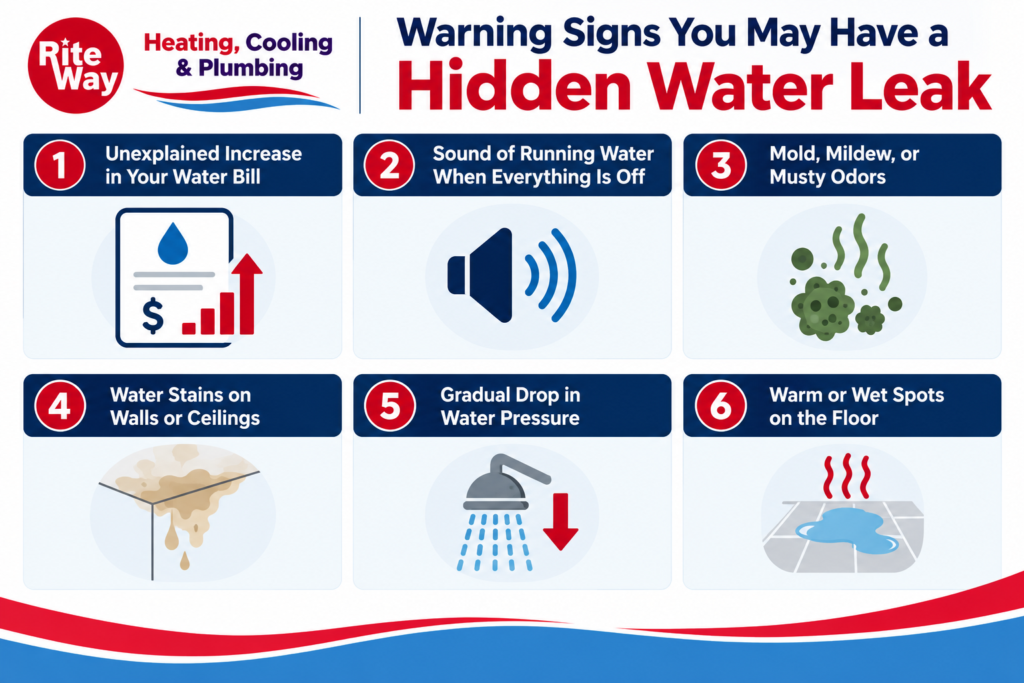
Warning Signs You May Have a Hidden Water Leak
Unexplained Increase in Your Water Bill
A water bill that has increased without a corresponding change in household usage is the most reliable early signal of a hidden leak. In Tucson, where Tucson Water bills are typically metered monthly, a spike that cannot be explained by seasonal irrigation, new appliances, or more people in the home warrants investigation. Even a slow drip from a pinhole leak in a supply line can waste thousands of gallons per month before it becomes visible anywhere in the home.
Sound of Running Water When Everything Is Off
If you hear water moving through your pipes when all fixtures and appliances are turned off, something is running that should not be. This sound is easiest to detect at night when the house is quiet. It may come from inside a wall, under the floor, or near the water heater. Do not ignore it.
Mold, Mildew, or Musty Odors
Mold requires sustained moisture to grow. If you notice a musty smell in a room, a closet, or near a wall that has no obvious water source, a hidden leak is a likely cause. In Tucson’s dry climate, mold growth is less common than in humid regions, which means when it does appear it almost always points to a real moisture problem rather than ambient humidity.
Water Stains on Walls or Ceilings
Yellowish or brown staining on drywall or ceiling surfaces indicates water has been present. In slab-foundation Tucson homes, ceiling stains often point to plumbing on the second floor or the roof. Wall stains near plumbing fixtures can indicate a supply line or drain leak behind the surface. Stains that have dried and returned are especially significant.
Gradual Drop in Water Pressure
A slow decline in water pressure throughout the home, as distinct from a sudden drop, can indicate a supply line that has been leaking for some time. As water escapes through a breach, less reaches your fixtures. In Tucson homes with older copper or galvanized supply lines, this pattern is a common precursor to a more significant failure.
Warm or Wet Spots on the Floor
Warm spots on a tile or concrete floor, particularly in areas not near a heating duct or appliance, are a classic slab leak sign. If a hot water line has breached under the slab, it transfers heat to the floor above. Wet or soft spots in flooring, or areas where tile grout has cracked without obvious cause, can also indicate moisture moving up from below.
How to Check for a Hidden Water Leak Yourself
The Water Meter Test
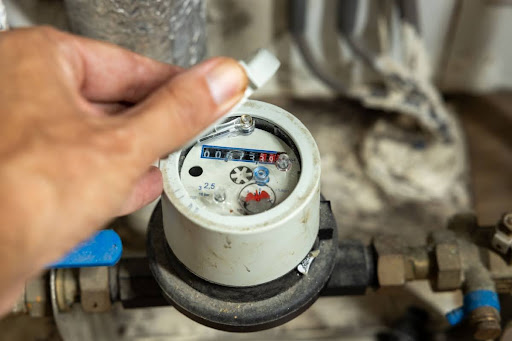
The water meter test is the most reliable DIY method for confirming whether a leak exists somewhere in your home’s plumbing.
- Turn off every water fixture and appliance in the home, including the ice maker, washing machine, and irrigation system.
- Locate your water meter, typically near the street at the front of the property or along the side of the home.
- Write down the current meter reading or take a photo.
- Do not use any water for at least one hour, ideally two.
- Check the meter again. If the reading has changed, water is moving through your system when it should not be.
Some Tucson Water meters also have a small triangle or dial indicator that spins when water is flowing. If that indicator is moving with all fixtures off, the test result is immediate.
The Dye Test for Toilets
Toilets account for a significant share of hidden water waste. A flapper that does not seal completely can allow water to run continuously from the tank to the bowl without making a sound.
- Remove the lid from the toilet tank.
- Add a few drops of food coloring or a dye tablet to the tank water.
- Do not flush. Wait 10 to 15 minutes.
- Check the toilet bowl. If color appears without flushing, the flapper is leaking and needs to be replaced.
Why Slab Leaks Are More Common in Tucson
Tucson is predominantly slab-foundation construction, which means the supply lines serving many homes run through or directly under a concrete slab. When one of those lines fails, water escapes under the foundation where it cannot be seen, sometimes for months.
What makes this a particular concern in our market is the soil. The ground beneath most Tucson-area slabs contains significant clay content. Clay expands substantially when wet, as it does during monsoon season (typically June through September), and contracts again as it dries out in the fall and winter. That repeated cycle of expansion and contraction creates mechanical stress on pipes running through or under the slab, accelerating failures over time, especially in older copper supply lines that have already accumulated scale and micro-corrosion from Tucson’s hard water.
Signs of a slab leak include:
- Warm or hot spots on the floor surface, particularly in areas not near a heat source.
- A hissing or running water sound coming from under the floor.
- Unexplained cracks in tile, grout, or baseboards near the floor line.
- Areas of the yard near the foundation that stay wet or unusually green.
- A gradual drop in water pressure throughout the home.
Slab leaks require professional detection and repair. The supply line is inaccessible without specialized equipment, and attempting to locate one without it typically means unnecessary damage to flooring or concrete.
Tucson’s Pipe Risk: Why Hidden Leaks Are More Common Here
Two factors make hidden water leaks more common in Tucson than national averages suggest: an aging housing stock and very hard water.
According to data from the University of Arizona, the largest proportion of Tucson homes were built between 1970 and 1979. That means a significant share of Tucson’s housing stock has supply lines now in the 45 to 55-year range. Galvanized steel pipes, common in homes built before 1970, corrode from the inside out and can develop hidden failures with no external warning. Copper supply lines in homes from the 1970s and early 1980s are susceptible to pinhole corrosion driven by Tucson’s hard water, which carries mineral content that accelerates pipe degradation over time.
If your Tucson home was built before 1980 and has never had a plumbing assessment, a routine inspection is a reasonable investment before a slow failure becomes a sudden one.
Is Your Water Heater Leaking?
Water heater leaks are among the most common calls Rite Way receives, and where the water is coming from determines how serious the situation is.
Leaking from the bottom of the tank is the most serious scenario. It typically indicates internal corrosion or sediment buildup that has worn through the tank lining. In Tucson, where hard water accelerates sediment accumulation, this failure often happens earlier than the national average water heater lifespan would suggest. If your tank is leaking from the base and is more than 8 years old, replacement is almost always the right call.
Leaking from the top of the tank is more commonly repairable. Loose inlet or outlet connections, a worn anode rod port fitting, or a faulty pressure relief valve are the most frequent causes. These can often be addressed without replacing the unit, particularly in a tank that is otherwise in good condition.
Moisture on the outside of the tank is not always a leak. Cold water heater tanks in certain conditions can accumulate condensation on the exterior surface. If the moisture disappears as the tank heats up and you see no pooling, discoloration, or dripping at connections, condensation is the likely explanation. If you see water pooling under the unit or rust forming on the tank body, treat it as an active leak and call a plumber.
When to Call a Professional: What Rite Way’s Leak Detection Team Does
If the water meter test confirms a leak but you cannot find a visible source, or if you suspect a slab leak, the next step is professional leak detection. This is a diagnostic service that locates the source before any repair work begins.
Rite Way’s leak detection team uses non-invasive ultrasonic equipment that identifies the distinct sound patterns water creates as it escapes from a pressurized pipe. This technology lets us locate leaks hidden behind walls, under floors, and beneath concrete slabs without unnecessary cutting or excavation. We can also detect leaks in main water lines, outdoor plumbing, and pool systems.
The goal is to find the exact source before any repair work begins, so the fix is targeted and your home is disturbed as little as possible.
Rite Way Provides Professional Leak Detection Throughout Tucson
If you have noticed any of the warning signs on this page, or if your water meter test confirmed a leak you cannot locate, Rite Way’s plumbing team is ready to help. We provide leak detection and repair services throughout Tucson, Marana, Oro Valley, Green Valley, Sierra Vista, and the wider Southern Arizona area.
Hidden Leaks FAQs
The most reliable signs are an unexplained water bill increase, the sound of running water when all fixtures are off, mold or musty odors in areas that should be dry, water stains on walls or ceilings, and a gradual drop in water pressure.
Warm or hot spots on the floor, a hissing sound from under the floor, unexplained cracks in tile or baseboards, and areas near the foundation that stay wet or unusually green are the most common indicators. Low whole-home water pressure can also point to a supply line breach under the slab.
Small amounts of moisture on the outside of a cold tank are usually condensation, an active leak shows up as dripping, pooling water, or rust around the base, drain valve, or pipe connections. If you see water pooling under the tank or discoloration on the tank body, call a plumber.
Rite Way uses acoustic listening equipment to hear water moving through pipes, thermal imaging cameras to detect temperature differences caused by escaping water, and pressure testing to isolate which pipe section is leaking. This lets us locate the source accurately before any walls or concrete are opened.
Two reasons: a large share of Tucson homes were built before 1980 with supply lines now past their typical service life, and Tucson’s hard water accelerates pipe corrosion faster than in soft-water markets. Both factors increase the likelihood of hidden pipe failures in our market.
Turn off all fixtures and appliances, record your meter reading, wait one to two hours without using any water, and check the meter again. If the reading changed, water is moving through your system when it should not be.
Yes, a toilet with a failing flapper can run continuously without any audible sound, wasting thousands of gallons per month. Add food coloring to the tank without flushing and if color appears in the bowl within 15 minutes, the flapper is leaking and needs to be replaced.
Call a plumber if the water meter test confirms a leak you cannot locate, if you see signs of a slab leak, if your water heater is pooling water at the base, or if your Tucson home was built before 1980 and has never had a plumbing assessment. Catching a hidden leak early is almost always less expensive than dealing with the damage it causes over time.