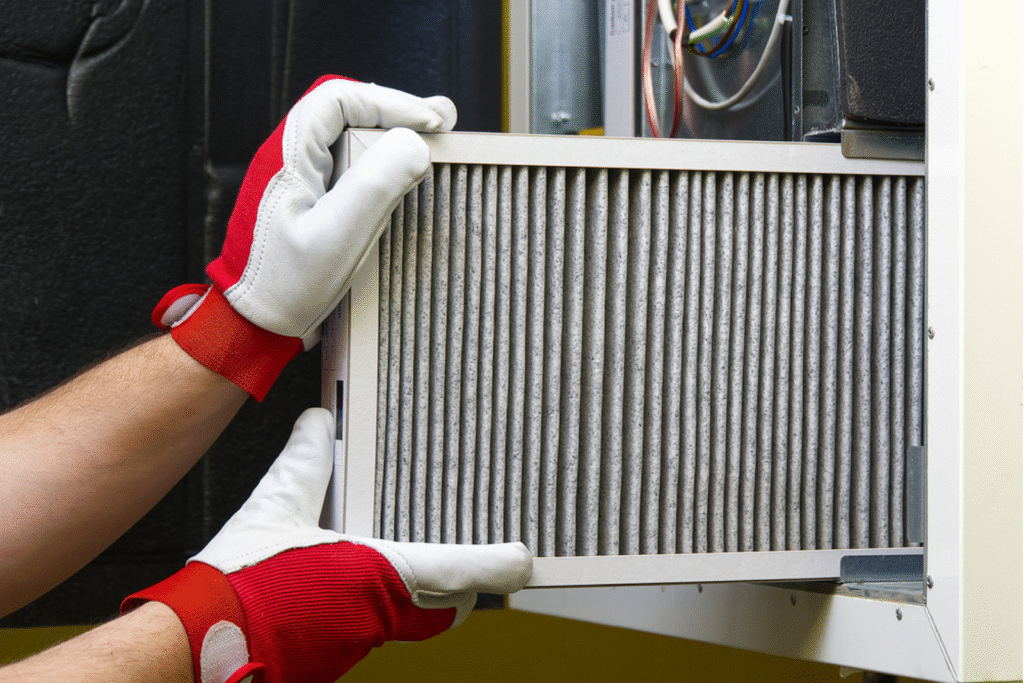
The honest answer is more often than the packaging suggests, especially in Tucson. Standard filter change intervals are based on moderate seasonal use, but Tucson homes run their HVAC systems for 8 to 10 months out of the year. Add in monsoon dust storms, occasional wildfire smoke, and some of the highest cooling demand in the country, and the national averages simply do not apply here. This guide gives you the right intervals for your specific filter type and household, adjusted for the conditions Tucson homeowners actually deal with.
Key Takeaways:
- In Tucson, filter intervals are almost always shorter than what the packaging recommends because HVAC systems run 8 to 10 months per year instead of the national average of 4 to 6.
- Filter type matters: fiberglass filters need changing every 20 to 30 days in our market, while pleated filters typically last 45 to 60 days.
- Monsoon season and wildfire smoke events are acute filter loading situations. Check your filter immediately after a major dust storm or high AQI event, regardless of when it was last changed.
- A dirty filter does not just hurt air quality. It forces your system to work harder, raises energy bills, and accelerates wear on the blower motor.
- Check your filter visually every month. Replace it when it looks grey or brown, not just when the calendar says to.
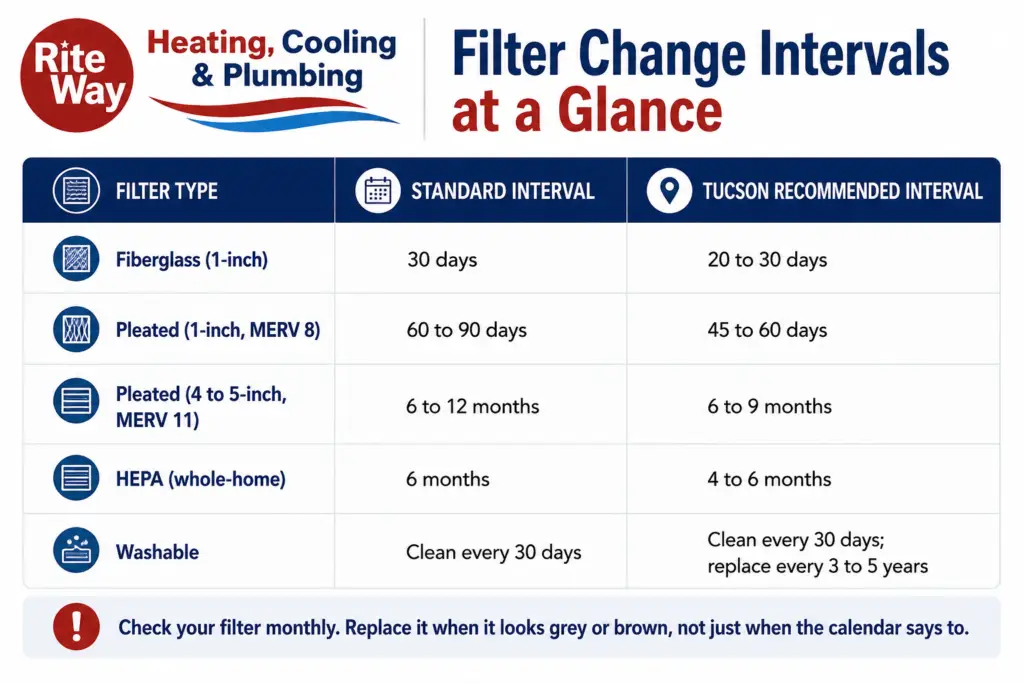
Standard intervals reflect manufacturer guidelines. Tucson intervals reflect recommendations based on local runtime, climate conditions, and service experience in the Southern Arizona market.
Filter Types and What You Need to Know
Fiberglass filters are the least expensive option and the least effective at trapping particles. They capture larger debris like lint and dust but pass smaller particles through. In Tucson, their 30-day interval shortens further during monsoon season and high-use summer months.
Pleated filters are the most common choice for Tucson homeowners and offer a meaningful step up in filtration quality. A standard 1-inch pleated filter is typically rated for 60 to 90 days nationally, but in a Tucson home running AC from March through November, plan to change it every 45 to 60 days. Thicker 4 to 5-inch pleated filters installed in a dedicated media cabinet last significantly longer while maintaining better airflow than thin filters.
HEPA filters used in whole-home systems are rated for roughly 6 months under standard conditions. In Tucson, plan for 4 to 6 months depending on season and household factors. HEPA filtration captures particles as small as 0.3 microns, which is especially relevant during wildfire smoke events.
Washable filters last up to 3 to 5 years with regular cleaning. Rinse with water only, no soap, and allow the filter to dry completely before reinstalling. In Tucson, plan to clean your washable filter every 30 days and check it more frequently during monsoon season. A damp filter reinstalled in the system can cause mold growth inside the air handler.
What Is a MERV Rating?
MERV stands for Minimum Efficiency Reporting Value. It measures how effectively a filter captures airborne particles on a scale from 1 to 16 for residential use.
- MERV 1 to 4: Fiberglass filters. Captures large debris only.
- MERV 5 to 8: Standard pleated filters. Good for most households.
- MERV 9 to 12: Mid-range pleated. Captures pet dander, dust mites, and mold spores. Best for allergy households.
- MERV 13 to 16: High-efficiency. Captures fine particles including some smoke. May restrict airflow in older systems not designed for dense filters.
If you are considering a MERV upgrade, confirm with your Rite Way technician that your system’s blower can handle the increased resistance before buying. Forcing a MERV 13 filter into a system designed for MERV 8 can reduce airflow, increase energy consumption, and stress the blower motor over time.
Factors That Affect How Often You Should Change Your Filter
Tucson’s Near-Year-Round Runtime
Most national filter recommendations assume a system runs 4 to 6 months per year. In Tucson, temperatures regularly exceed 100 degrees from May through September, with the National Weather Service recording a normal of 68 days above 100 degrees annually and as many as 112 days in a single year. Cooling season runs from roughly March through November, meaning most Tucson systems are running 8 to 10 months of the year. A filter rated for 90 days under standard use may be fully loaded in 45 to 60 days in a Tucson home. Runtime is the single biggest reason national intervals underserve our market.
Monsoon Season
Tucson’s monsoon season typically runs June through September, with the most intense storms concentrated in July and August. Haboobs and dust storms during this period can deposit significant particulates in a single event, clogging a filter that was changed just weeks prior. Check your filter immediately after any significant storm and replace it if it looks visibly grey, regardless of when it was last changed.
Wildfire Smoke and Air Quality Events
When the Air Quality Index (AQI) rises above 100 due to wildfire smoke from Arizona or neighboring states, your filter loads faster than normal. Fine smoke particles penetrate deeper into filter media than standard household dust. During any AQI event above 100, check your filter weekly and switch to recirculation mode on your thermostat to reduce how much outdoor air the system draws in. A higher MERV rating (11 to 13) provides meaningfully better smoke capture than a standard MERV 8 filter during these events.
Pets
Households with one dog or cat should move to a 30 to 60-day replacement cycle. Homes with multiple pets, or pets that spend time outdoors and track in desert particulate, should check the filter every 30 days without exception. Pet dander and hair contribute significantly to filter load, and in Tucson’s dry conditions that material stays airborne longer than in humid climates.
Allergies and Asthma
If anyone in the household has allergies, asthma, or respiratory sensitivities, a 30-day replacement cycle is the standard recommendation regardless of filter type. The Asthma and Allergy Foundation of America recommends allergie households change filters more often. In Tucson, where pollen season is extended and monsoon season adds mold spores to the air, this interval is especially important to maintain.
Household Size
More people means more dust, skin particles, and hair circulating through the system. A single occupant in a smaller Tucson home can reasonably push toward the longer end of any given filter’s interval. A household of four or more should move toward the shorter end. Combine high occupancy with pets and allergies and monthly checks become non-negotiable.
Signs Your Filter Needs Changing
Do not rely solely on the calendar. Check your filter visually every month and replace it when you see any of these:
- The filter surface is visibly grey, brown, or coated with dust.
- You can no longer see light through the filter when held up to a light source.
- Dust is accumulating around your supply or return vents.
- Your home feels stuffier than usual or takes longer to reach your set temperature.
- Your energy bills have increased without a change in usage or thermostat settings.
- The system is running longer cycles than normal.
A clogged filter does not just affect air quality. It forces the system to work harder to push air through the restricted media, which increases energy consumption, accelerates blower motor wear, and in severe cases can cause the evaporator coil to freeze. According to the U.S. Department of Energy, replacing a clogged filter can reduce your HVAC system’s energy consumption by 5 to 15 percent.
Rite Way Keeps Tucson Homes Running Efficiently
If your system is running harder than it should, not cooling efficiently, or you are not sure what filter setup is right for your home, Rite Way’s HVAC team can help. We service air conditioners, heat pumps, and HVAC systems throughout Tucson, Marana, Oro Valley, Green Valley, Sierra Vista, and the wider Southern Arizona area.
Changing HVAC Filters FAQs
More often than most national guides recommend. Tucson homes run HVAC systems 8 to 10 months a year, so a 1-inch pleated filter rated for 90 days nationally may need changing every 45 to 60 days here. Check monthly and replace when it looks grey, not just when the calendar says to.
MERV measures how effectively a filter captures airborne particles. MERV 8 to 12 covers most Tucson households. Higher ratings (13 to 16) capture finer particles including smoke but can restrict airflow on older systems. Ask your Rite Way technician whether your system can handle a higher MERV filter before upgrading.
A dirty filter restricts airflow, forcing the system to work harder, raising energy bills, accelerating blower motor wear, and in extreme cases causing the evaporator coil to freeze. The U.S. Department of Energy estimates a clogged filter can increase energy consumption by 5 to 15 percent.
No. Disposable fiberglass and pleated filters are designed for single use. Washing them damages the filter media. Washable filters are specifically designed for repeated cleaning: rinse with water only, no soap, let it dry completely before reinstalling, and clean every 30 days.
Yes, significantly. A major haboob can load a filter that was changed three weeks prior. Check your filter immediately after any significant dust storm and replace it if it looks grey, regardless of when it was last changed.
Yes. When the AQI rises above 100 due to smoke, your filter loads faster than normal. Check it weekly during any smoke event and consider switching to recirculation mode on your thermostat to limit how much outdoor air the system pulls in.
Yes. A MERV rating that is too high for your system restricts airflow and stresses the blower motor over time. If you are upgrading from MERV 8 to MERV 13 or higher, confirm with a Rite Way technician that your system can handle the increased resistance before buying.
Check the existing filter. The dimensions are printed on the cardboard frame, typically listed as length by width by depth in inches. Common sizes in Tucson homes include 16x20x1, 20x25x1, and 16x25x1, though the right size depends on your specific air handler.