Bugs usually get into an air conditioner through small gaps around the refrigerant lines where they pass through your exterior wall, at the condensate drain line opening, through leaky return ducts in the attic, or around a window unit frame. In Tucson and across Southern Arizona, this is a year-round concern, but monsoon season makes it significantly worse. Heavy summer storms displace insects from their normal environments and send ants, cockroaches, crickets, and scorpions looking for dry, stable shelter, and the gaps around your AC system make it an easy target.
The reassuring part is that most entry points are straightforward to address. Sealing a few key gaps, keeping the outdoor unit clear, and staying on top of yearly AC maintenance can handle most of the problem. Here is where bugs actually get in, what to do about each entry point, and how to know when the situation calls for an HVAC technician versus a pest control company.
Most homeowners assume bugs enter through the vents, but more commonly, they enter through structural gaps in the system itself.
Refrigerant line penetrations: Where refrigerant lines and electrical wiring pass through your exterior wall, there is almost always a gap between the pipe and the wall material. In older Tucson homes, that gap is often filled only loosely with foam that has dried out and pulled away over time.
The condensate drain line: Every central AC system produces condensation that drains outside through a small pipe. The opening where that line exits the house can let small insects in if it isn’t properly screened or sealed.
Return air ductwork: Leaky return ducts in attics pull in whatever is in that space, including insects and the dust and debris they carry. Attic ductwork in older Southern Arizona homes is a particularly common weak point.
Return grilles and supply registers: Gaps between the grille frame and the wall or ceiling can let insects travel through wall cavities directly into the duct system.
Outdoor unit openings: The condenser cabinet has openings that allow airflow. Insects, particularly ants, can enter and nest around the electrical components inside.
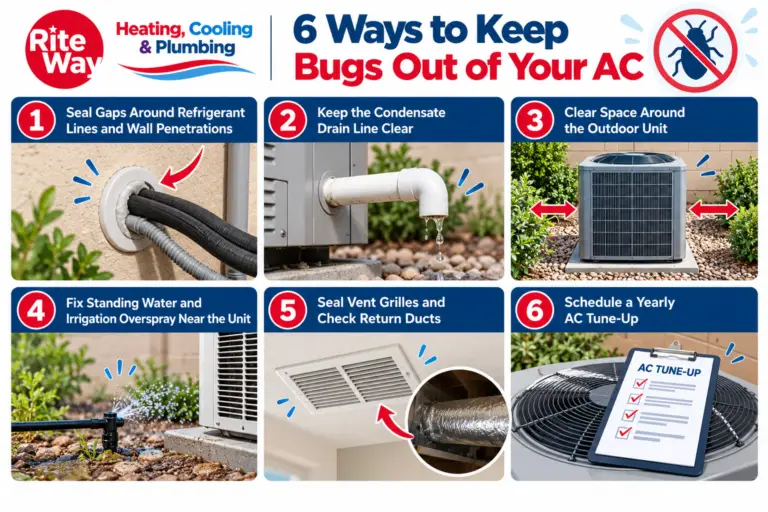
Use an outdoor-rated sealant or foam to close the gap where refrigerant lines and wiring enter the house. This single step covers one of the most consistent entry points in Tucson homes. Check the seal each spring before the cooling season starts and reseal anywhere it has cracked or pulled away.
Insects, algae, and debris can clog the condensate drain, triggering a safety shutoff or causing water to back up into the system. In Rite Way’s review of 100 Tucson AC repair calls from June 2026, condensate drain shutdowns showed up in 23% of cases. Keep the drain line opening clear of debris and have the line flushed during your annual AC tune-up.
Trim desert shrubs, palo verde, oleander, and any other plants back from the condenser. Keep gravel and rock clear of debris buildup around the unit base. Move any woodpiles, stacked materials, or yard debris away from the condenser cabinet. Follow the manufacturer’s clearance recommendation for your unit, which is typically at least a couple of feet on the sides.
Standing water near the condenser attracts insects regardless of species. Check that drip irrigation emitters aren’t directed toward the unit base, that the surrounding ground drains properly after monsoon storms, and that no low spots hold water after rain.
Press the edges of supply and return grilles flush against the wall or ceiling and seal any gaps with foam tape or appropriate caulk. If bugs are appearing near vents regularly, leaky return ducts may be the deeper issue. Rite Way’s Aeroseal duct sealing can close internal duct leaks that tape and caulk cannot reach. Duct cleaning is also worth considering if debris has built up inside the system.
A professional tune-up includes cleaning the outdoor unit, checking refrigerant lines, clearing the condensate drain, and inspecting the system for anything that should not be there. It is the most consistent way to catch insect-related issues before they affect performance. Schedule before cooling season in Tucson, ideally in late winter or early spring before the heat arrives.
Tucson’s summer monsoon brings humidity, heavy rain, and rapid temperature swings that displace insects from their normal environments. Ants, cockroaches, crickets, and scorpions all become more active in and around homes during and after storms as they seek dry, stable conditions. The gaps around AC equipment become more significant during this period because insect pressure is simply higher. Checking line set seals, clearing standing water, and trimming vegetation back from the outdoor unit after major storms reduces how attractive your equipment becomes as a refuge.
If bugs seem to appear near or from your vents, they are likely not traveling through the ductwork from outside. More commonly, they are entering through gaps in the home’s envelope and gravitating toward vents because of air movement. The most likely sources are gaps around the grille frames, leaks in return ducts pulling insects from the attic, or insects entering through other openings and moving through wall cavities.
Sealing grille edges is the starting point. If the problem persists, leaky return ducts are worth inspecting. Rite Way’s Aeroseal blog post covers when duct leakage is significant enough to address.
Ants are one of the more common pest problems in Tucson AC systems. They can build nests inside the condenser cabinet and around electrical components, which can interfere with system operation over time. Do not spray insecticide into the unit or on its electrical parts. Have a technician inspect and clean the outdoor unit during a tune-up. For an established ant colony around or inside the unit, a licensed pest control company should address the infestation before the HVAC technician cleans and inspects the system.
Knowing which professional to call first saves time and avoids the wrong fix.
Call a licensed pest control company when:
Call an HVAC technician when:
For many situations involving the outdoor unit, both calls are appropriate: pest control handles the infestation, and the HVAC technician cleans and inspects the system afterward. Rite Way handles the AC repair and maintenance side of that equation.
Rite Way’s licensed technicians serve Tucson and communities across Southern Arizona and the Greater Phoenix Valley. Whether you need an AC tune-up, help with duct leakage, or a system inspection after a rough monsoon season, we provide honest options and upfront pricing before any work begins. We’ve served Arizona homeowners since 1959 and answer phones 24/7.
Yes. Ants nesting around electrical components, debris from insect activity clogging the condensate drain, and in rare cases rodents chewing wiring can all cause system damage or shutdowns.
Avoid spraying insecticide inside the unit or on electrical components, as chemicals can damage parts and should not be pulled into your home’s air. Seal entry points, keep the area clear, and call a pest control company for active infestations.
They are almost certainly not traveling through ductwork from outside. More likely they are entering through gaps in the home’s envelope and moving toward vents because of airflow. Sealing grille edges and checking return duct leakage addresses the most common causes.
Yes. Window units have larger gaps around the frame and lack the sealed ductwork of a central system, making them a more direct entry point. Foam insulation strips around the frame help, but an active infestation inside the unit is a pest control situation first.
Common signs include unexpected system shutdowns, reduced airflow, unusual sounds from the outdoor unit, or water backing up from a clogged condensate drain. If the system starts behaving differently after a monsoon storm or a stretch of high pest activity, have a technician take a look.
Small insects can enter through the condensate drain opening on the exterior of the home. Keeping the opening clear of debris and ensuring it is not creating standing water at the exit point reduces this risk. The drain line can also be cleared and inspected during a tune-up.
Ants are the most frequently encountered pest inside outdoor condenser units in Southern Arizona. Cockroaches, crickets, and other insects commonly use line set gaps and unsealed grille edges as entry points. Scorpions are a less common but more serious concern and should always be handled by a licensed pest control company.
Once a year is a reasonable baseline, ideally in late winter or early spring before the cooling season begins. Tucson’s temperature swings and UV exposure cause foam and caulk to degrade faster than in milder climates, so it is worth a quick visual check before you rely on the system heavily each season.