Vomit in the toilet usually will not damage your plumbing. Toilets are built to handle waste, and an occasional episode flushes away like anything else. Problems start when large food particles meet a weak flush or a drain line that already has buildup — something more common in Tucson and Phoenix homes because of hard water, which narrows pipes over time. Here is when throwing up in the toilet can cause a clog, how to clean up safely afterward, what septic owners should know, and when to call a plumber.
Key Takeaways
- Vomit in the toilet is generally fine for plumbing. It is mostly liquid and flushes with the waste water.
- Large food particles, a weak flush, or existing pipe buildup can turn an ordinary episode into a clog.
- The toilet is always the better choice over the sink — it has larger pipes and a much stronger flush.
- Clean with soap and water first, then disinfect with a bleach-based cleaner. Never mix bleach with other cleaners.
- Occasional vomiting will not harm a septic system. Repeated use of large amounts of bleach or harsh chemicals can.
What Happens When You Flush Vomit Down the Toilet?
Vomit is mostly water, stomach acid, and partly digested food. When you flush, it travels through your drain line to the city sewer system — which serves most homes in Tucson and Phoenix — or into your septic tank if your property uses one. That part of the journey works the same as any other waste.
The concern is physical debris. Larger food particles can catch on mineral deposits inside older pipes and build up over time. In Tucson and Phoenix, hard water leaves calcium and mineral deposits along pipe walls that narrow the passable space. That makes debris more likely to snag than in homes with softer water, and it is one reason older drain lines here can develop slow drains or partial clogs more quickly.
A healthy toilet with a full flush handles the occasional episode without issue. The risk goes up when the system is already compromised. Slow drains, gurgling sounds after flushing, or backups in more than one fixture are signs that something else is going on.
Is It Better to Throw Up in the Toilet or the Sink?
The toilet is always the better choice. It is designed for waste, uses a large volume of water with each flush, and connects to drain lines wide enough to handle solid material. Sinks have narrower pipes, a P-trap designed to catch debris, and far less water force behind a rinse. If it happens in the sink, run hot water for several minutes and skip chemical drain cleaners, which can damage older pipes without reliably clearing a blockage.
Why Vomiting in a Sink Drain Causes More Problems
A kitchen or bathroom sink drain is typically 1.5 to 2 inches in diameter. The P-trap beneath the basin is designed to hold water and block sewer gases, but that curve also catches food particles and solids. Vomit that contains chunks has a much higher chance of lodging there than it does in a toilet drain.
If material does catch in the P-trap, hot water and dish soap can help break it up. Run hot water for a few minutes and wait to see whether the drain clears. If it stays slow, contact Rite Way for drain cleaning rather than reaching for a chemical product.
How to Clean Your Toilet and Bathroom After Someone Is Sick
Stomach bugs like norovirus spread easily through contact with contaminated surfaces, so cleanup matters. This is cleaning guidance only — contact a healthcare provider for any health-related concerns.
- Put on disposable gloves before touching anything.
- Close the lid and flush to limit aerosols.
- Wipe down visible surfaces with paper towels and dispose of them in a sealed bag.
- Clean with soap and water — the toilet seat, handle, rim, and any nearby surfaces the sick person may have touched.
- Disinfect with a bleach-based cleaner or make your own solution using the CDC’s bleach dilution guidance: 5 tablespoons (about 1/3 cup) of household bleach per gallon of water. Leave it wet on the surface for at least one minute before wiping.
- Never mix bleach with ammonia or other cleaners. The vapors can be dangerous.
- Wash your hands thoroughly with soap and water when finished.
Vomiting, Bleach, and Septic Systems
If your home uses a septic system — common in outlying areas of Rite Way’s service territory around Tucson, Sierra Vista, and Southern Arizona — occasional vomiting will not harm the system. Septic tanks rely on bacteria to break down waste, and a normal illness episode does not upset that balance.
What could cause problems over time is regular use of very large amounts of bleach or harsh chemical drain cleaners poured directly into the system. Normal cleanup amounts — wiping surfaces with a diluted bleach solution as described above — are generally fine. If you are going through a stomach bug and cleaning repeatedly, use bleach in moderation and stick to the diluted solution rather than pouring concentrate down the drain.
For regular septic maintenance, Rite Way offers septic pumping services and home septic inspection and certification.Start at the top of the unit and work down. Water drips downward, so pooling at the base may have started higher up. A dry paper towel run slowly along each section helps confirm the source.
What to Do If Your Toilet Clogs After Someone Throws Up
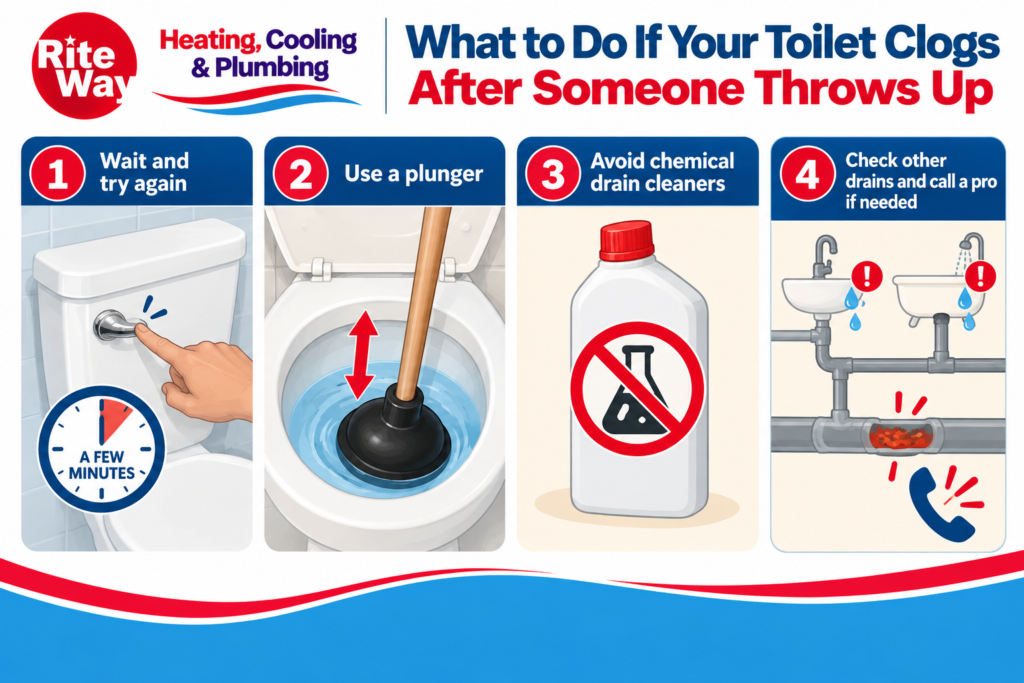
If the toilet does not fully flush or drains slowly:
- Wait a few minutes and try flushing again. The water pressure from a second flush sometimes clears minor blockages.
- Use a plunger with a firm seal over the drain opening. Steady in-and-out pressure is more effective than rapid plunging.
- Do not use chemical drain cleaners in a toilet. They can damage porcelain and are rarely effective against a true clog.
- If other drains in the house are also slow or backing up, the problem is likely further down the line. Stop using water and call a plumber.
Signs You Need Drain Cleaning or Emergency Plumbing
Schedule service soon if you notice:
- A drain that stays slow after plunging
- Gurgling sounds from the toilet or other fixtures after flushing
- Recurring partial clogs in the same drain
- Water draining slowly in more than one fixture
Call for emergency plumbing if you notice:
- A toilet that overflows or will not stop running
- Sewage backing up into a sink, tub, or floor drain
- A foul sewer smell coming from multiple drains
Rite Way handles drain cleaning in Tucson and offers emergency 24/7 plumbing for Tucson-area residents. Phoenix-area residents can reach our Phoenix emergency plumbing team.
When Toilet Problems Point to Repair or Replacement
If your toilet is running slowly, rocking, or causing repeated issues beyond a temporary clog, the problem may not be the plumbing. A flapper that does not seal properly reduces flush pressure, making it easier for debris to catch. A cracked bowl or base can allow slow leaks that damage the surrounding floor. If your toilet is aging and the issues keep coming back, Rite Way handles toilet repair and replacement in Tucson.
Serving Tucson, Phoenix, and Sierra Vista Since 1959
Rite Way’s licensed plumbers serve Tucson, Phoenix, Sierra Vista, and communities throughout Southern Arizona. Whether you need drain cleaning, septic service, or emergency plumbing, we give you honest options and upfront pricing before any work begins. We have been serving Arizona homeowners since 1959 and answer phones 24/7.
Vomit in the Toilet FAQs
Occasionally, yes. Vomit that contains large food particles can catch on mineral buildup inside older pipes. A single episode rarely causes a clog, but if the toilet was already draining slowly, it can make things worse.
No. Stomach acid is diluted significantly by flush water before it reaches your pipes, and the volume is too small to affect modern drain materials.
Yes, after cleaning with soap and water first. Use a bleach-based cleaner or mix about 5 tablespoons of household bleach per gallon of water per CDC guidance, let it sit at least one minute, then wipe. Never mix bleach with other cleaners. If you have a septic system, normal cleanup amounts are generally fine.
An occasional episode is not a problem. Septic systems handle biological waste routinely. Repeated use of large amounts of bleach or harsh chemical cleaners is more of a concern over time, since they can reduce the bacteria that break down waste in the tank.
Run hot water for several minutes to help flush the drain. If the sink stays slow, call for drain cleaning rather than reaching for a chemical drain cleaner, which can damage older pipes without reliably clearing the blockage.
A faint odor that fades after a few flushes is normal. If the smell persists or comes from the drain itself, it may point to buildup deeper in the pipe.
No. Paper towels do not break down in water the way toilet paper does and can cause a clog on their own. Seal them in a plastic bag and put them in the trash.
If the toilet was draining normally before and slowed down right after, a partial blockage from food particles is a reasonable explanation. If the slow drain was already there, the episode likely just made it more noticeable — and the underlying buildup is worth addressing regardless.