
Frozen AC coils usually come down to two problems: not enough warm air moving across the evaporator coil, or not enough refrigerant inside it. Either way, ice builds up, cooling drops off, and running the system frozen can damage the compressor. In Tucson and Phoenix, where AC systems run most of the year and fine desert dust clogs filters faster than in most climates, a freezing coil is one of the more common summer repair calls we see. Monsoon season adds another layer, higher outdoor humidity puts more moisture on the coil, which turns to ice when conditions are right. Rite Way’s review of 100 Tucson-area repair calls from one week in June 2026 found refrigerant or leak issues in 55% of cases and blower problems in 53%, many of which contributed directly to a frozen coil. Here is how to tell if your coils are frozen, how to thaw your AC safely, the five most common causes, and when to call Rite Way for AC repair.
Key Takeaways
- Frozen AC coils are caused by restricted airflow or a refrigerant leak. Both need to be addressed before the system runs again.
- Turn cooling off and the fan on to thaw safely. Do not chip the ice or pour water on the coil.
- A refrigerant leak is always a job for a licensed technician and cannot be resolved by simply adding refrigerant.
- Rite Way’s June 2026 Tucson repair study found refrigerant or leak issues in 55% of calls, often traced to the evaporator coil.
- If the coil refreezes after thawing, stop running the system and call for service.
Signs Your AC Coils Are Frozen
You may not be able to see the evaporator coil directly, but several signs point to ice buildup:
- Ice visible on the refrigerant line coming out of the indoor unit or on the line set outside
- Warm or room-temperature air from the supply vents when the system is running
- Noticeably weak airflow from registers throughout the home
- Water pooling around the indoor air handler or in the condensate drain pan
- A hissing or bubbling sound, which can indicate a refrigerant leak
How to Thaw a Frozen AC Safely
Do not keep running a frozen system. Follow these steps:
- Set the thermostat to OFF for cooling. Switch the fan setting to ON so the fan continues running. This blows room-temperature air over the coil and speeds up the thaw without running the compressor.
- Check the air filter immediately. If it is clogged, replace it before the system runs again.
- Place towels around the base of the indoor unit and check the condensate drain pan. Melting ice produces a significant amount of water and can overflow if the drain is blocked.
- Do not chip or scrape ice off the coil. The coil fins are delicate and easy to damage.
- Wait until all ice has melted completely before switching back to cooling. Depending on how much ice has built up, this typically takes a few hours.
- Turn the cooling back on and monitor for the next hour. If the system refreezes, stop running it and call a technician. A refrozen coil almost always means a repair is needed.
Frozen again after thawing? Rite Way’s AC technicians find the cause and fix it the same visit. Schedule AC repair.
5 Common Causes of Frozen AC Coils
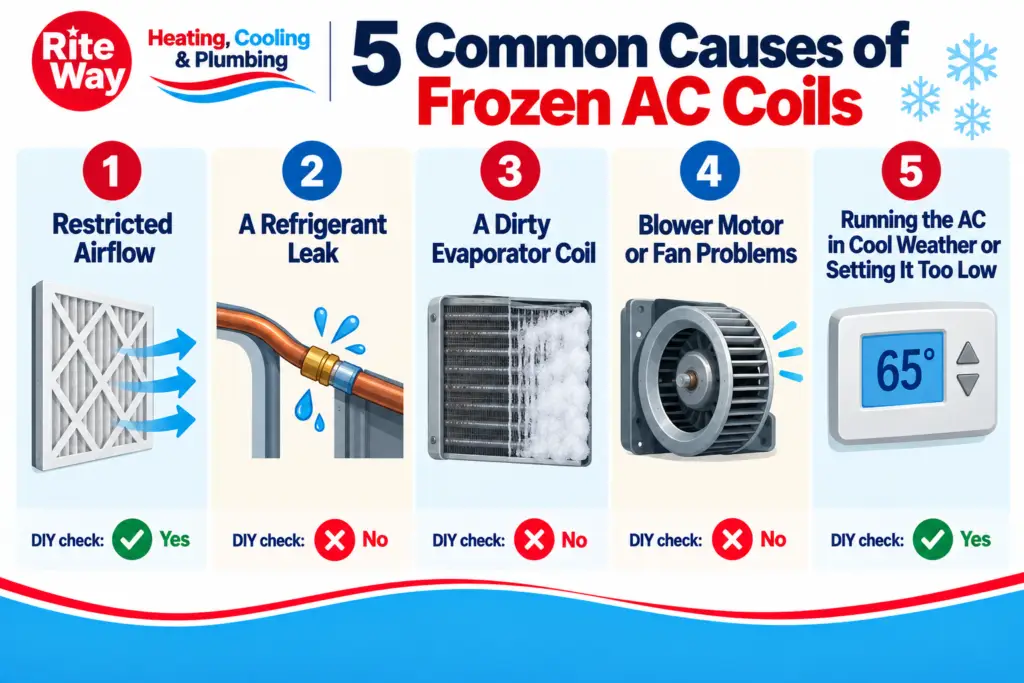
1. Restricted Airflow
DIY check: Yes
The most common cause. The evaporator coil needs a steady flow of warm indoor air to stay above freezing. When that flow is blocked, the coil temperature drops and ice forms. The most common culprits are a clogged air filter, closed or blocked supply vents, and leaky or collapsed ductwork that starves parts of the system of airflow.
Check the filter first. In Tucson, where AC runs most of the year and desert dust accumulates quickly, filters need replacing more frequently than the label suggests. Check supply vents throughout the house and confirm none are closed or blocked by furniture. Our post on closing vents explains why closed vents hurt rather than help, and our ductwork guide covers how duct condition affects the whole system. Rite Way offers duct cleaning and Aeroseal duct sealing for airflow problems that go deeper than the filter.
2. A Refrigerant Leak
DIY check: No
When refrigerant level drops due to a leak, the remaining refrigerant expands too much and the coil temperature falls below freezing. Adding refrigerant without finding and fixing the leak is not a solution. The coil will freeze again and the leak will continue to damage the system.
Rite Way’s review of 100 Tucson-area repair calls from one week in June 2026 found refrigerant or leak issues in 55% of cases, often traced directly to the evaporator coil. Refrigerant work requires an EPA-certified technician and is not a DIY repair.
3. A Dirty Evaporator Coil
DIY check: No
Over time, dust and debris coat the coil surface and insulate it from the warm air that is supposed to keep it above freezing. In Tucson, where fine desert particulate is in the air year-round and the system runs most of the year, coil fouling happens faster than in cooler climates. An annual AC tune-up includes a coil inspection and cleaning and is the most reliable way to catch this before it causes a freeze.
4. Blower Motor or Fan Problems
DIY check: No
The blower motor moves air across the evaporator coil. A failing motor or a fan running below the correct speed reduces airflow the same way a clogged filter does, with the same result. Rite Way’s June 2026 study found blower motor problems in 53% of calls. A blower issue requires a technician to diagnose and repair.
5. Running the AC When It Is Cool Outside or Set Extremely Low
DIY check: Yes
On cooler spring and fall evenings in Tucson, outdoor temperatures can drop low enough that running the AC causes the coil to ice over in some systems. Setting the thermostat extremely low, well below 70 degrees Fahrenheit, can have a similar effect. If the system freezes only on cool nights or at unusually low setpoints, adjusting the thermostat and letting the system run in fan-only mode until conditions warm up is a reasonable first step. If it happens repeatedly under normal conditions, have the system evaluated.
Why Frozen Coils Are Common in Tucson
AC systems in Tucson run approximately 8 to 10 months a year, which means filters load with dust faster, coils accumulate debris faster, and refrigerant leaks that might show symptoms slowly in other climates can develop over a very long operating season. Monsoon season brings higher outdoor humidity, which means more moisture on the coil and a higher chance of ice forming when airflow is even slightly restricted. Attic ductwork in many Tucson homes from the 1970s and 1980s has gaps and leaks that quietly reduce airflow to the coil season after season. Staying on top of filter changes and scheduling a yearly tune-up before summer are the most effective defenses in this climate.
Can a Frozen Coil Damage Your AC?
Yes. Running the system frozen puts strain on the compressor, which is not designed to pump refrigerant back as liquid. Sustained operation with ice on the coil can shorten compressor life significantly. The meltwater from thawing ice can also overflow the condensate drain pan and cause water damage to the air handler or surrounding areas. Neither situation improves by leaving the system running. Turn it off, thaw it, find the cause, and fix it.
When a Frozen Coil Means It’s Time to Replace
A refrigerant leak at the evaporator coil in an older system is one of the most common points where repair cost approaches or exceeds replacement value. If the coil itself needs replacement on a system past the 10 to 15-year mark, or if the system still uses R-22 refrigerant, replacement is often the more practical answer. Our post on when to replace your air conditioner covers how to weigh that decision, and Rite Way offers AC installation and replacement across Tucson and Southern Arizona.
How to Prevent Frozen AC Coils
- Change the filter regularly. In Tucson, checking monthly and replacing every one to two months during peak cooling season is a reasonable baseline.
- Keep vents open and unblocked. Closed vents restrict airflow and raise the risk of a freeze.
- Schedule an annual AC tune-up. A tune-up includes coil inspection, refrigerant check, and blower evaluation.
- Address duct leaks. If airflow is consistently weak throughout the home, have the ductwork inspected before the next cooling season.
Stop the Freeze-Thaw Cycle Before It Starts.
Rite Way’s licensed HVAC technicians serve Tucson, Marana, Oro Valley, Vail, Sahuarita, and communities across Southern Arizona. Whether you need a frozen coil diagnosed, a refrigerant leak repaired, or an AC tune-up before the next cooling season, we give you honest options and upfront pricing before any work begins. We have been serving Arizona homeowners since 1959 and answer phones 24/7.