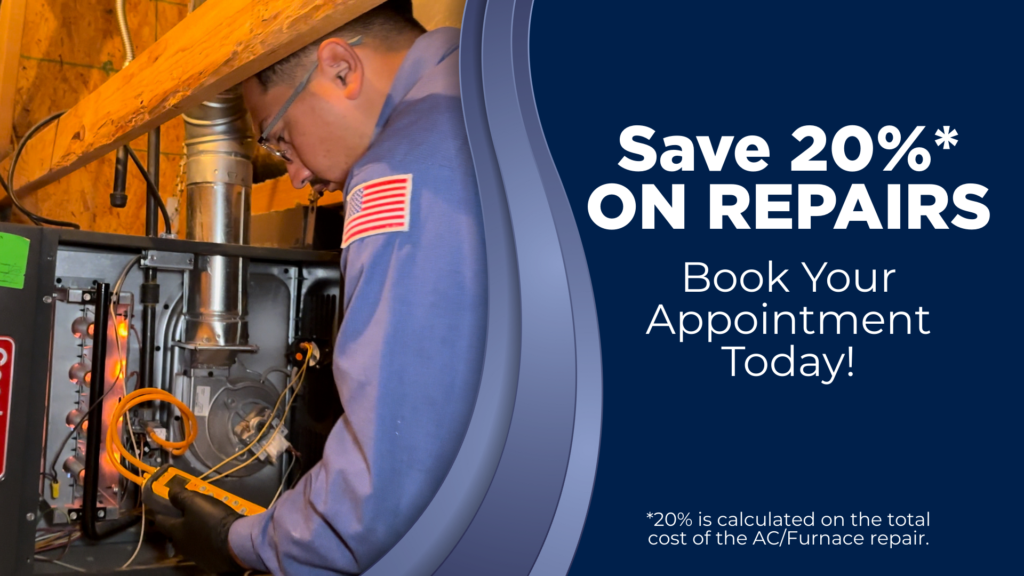
20% Off AC & Furnace Repairs
Must mention coupon to receive discount
Most Valley homeowners do not think about their furnace from March through November. It sits in a closet or utility space while the AC carries the load through a long, hot summer, and by the time the first cold night hits in December, it has been completely ignored for eight or nine months. That is exactly when the calls start. A system that was borderline last winter, or one that has never been serviced in a home built during Phoenix’s 1980s and 1990s expansion, may not cooperate when you need it. Rite Way repairs gas and electric furnaces from every major brand across the Phoenix metro from our Gilbert office, and you can reach us by phone 24/7 to schedule service. Our technicians find the cause, explain it plainly, and walk you through your options before any work begins. We have served Arizona homeowners since 1959, and more than 5,000 Valley homeowners have reviewed our Phoenix team on Google with a 4.9-star rating.
View Heating Repair in Tucson.
When a furnace stops working in the Valley, the outside temperature does not have to be freezing for it to matter. Phoenix homeowners run their heat through December and January evenings, and plenty of nights in the 40s and 50s are cold enough that a furnace quitting at 10pm is not something anyone wants to sleep through. Add in a system that is showing a safety concern, a strange smell, or a CO alarm, and there is no question it needs attention right away.
Rite Way is available 24/7 by phone to schedule emergency furnace repair across the Valley. Urgent no-heat situations and safety concerns are prioritized, and our technicians work out of our Gilbert office to reach homes across the Phoenix metro as quickly as possible. Call us any time at 602-661-1064.
Schedule Your Service

NOT COMBINABLE WITH ANY OTHER OFFER
RULES AND RESTRICTIONS APPLY
NOT COMBINABLE WITH ANY OTHER OFFER
RULES AND RESTRICTIONS APPLY
NOT COMBINABLE WITH ANY OTHER OFFER
RULES AND RESTRICTIONS APPLY
When your heat goes out, you want a team that knows the system in front of them, explains what they find, and fixes it right the first time. Here is what Rite Way brings to every furnace repair call in the Valley:
We want you to understand your furnace problem as well as we do. Your technician will show you what failed, explain why in plain language, and review your repair options before touching anything. Nothing moves forward until you approve it.
Our Phoenix team works out of Gilbert and knows Valley homes. Whether you are in a newer subdivision in Chandler or an older neighborhood in Mesa where the original ductwork is still in place, we factor in your home’s age and condition when we make a recommendation. After the repair, we test the system and answer any questions before we leave.
Furnace problems often develop gradually. Catching them early almost always leads to a simpler, less expensive fix.
Watch for these warning signs:
If you smell gas near your furnace, do not turn the furnace on or off, or flip any light switches. Leave the home right away and call 911 or your gas utility from outside before re-entering.
If a carbon monoxide alarm sounds, get everyone out of the home immediately and call 911 from outside. Do not go back inside until emergency responders confirm it is safe. Once the situation is cleared, call us to inspect and repair the furnace before using it again.
When a Valley furnace fires up for the first time after months of sitting idle, it is running on whatever settled inside it over the summer. Dust collects on burners, heat exchangers, and other components that have gone untouched since the previous winter. A brief burning smell on startup is common and usually harmless as that dust burns off. If the smell lingers, smells like gas or burning plastic, or the system will not ignite at all, it’s time to call a technician.
The age of Phoenix’s housing stock makes this more complicated. According to a 2026 NAHB analysis of ACS data, the median home in Phoenix was built in 1984. Much of the ductwork, venting, and gas connections feeding the furnace in those homes is roughly 40 years old. A repair sometimes involves more than the furnace itself, and our technicians check the surrounding systems for issues that affect the repair and the performance of whatever comes after it. In older Mesa and Tempe neighborhoods, we see this regularly. In newer East Valley communities, the equipment is younger but the idle-season pattern is the same.
Our technicians handle a wide range of heating issues across the Phoenix area:
By finding the root cause rather than the most obvious fix, we reduce the chance of the same problem coming back next season.
According to EIA’s 2020 Residential Energy Consumption Survey, 51% of Arizona homes use electricity as their main heating fuel and 36% use natural gas. Both system types are common across the Valley, and they fail in different ways.
Gas furnace repair involves ignition systems, burners, gas valves, and airflow components. Safety testing is always part of the process for gas systems, and we check for carbon monoxide risks on every visit.
Electric furnace repair focuses on heating elements, electrical connections, relays, and control boards. These systems have fewer mechanical components than gas furnaces but still require accurate diagnosis to fix correctly.
Propane furnace repair follows the same diagnostic process as gas, with specific attention to pressure regulation and valve components unique to propane systems. We work on propane furnaces across the Phoenix area and will note any fuel-specific considerations in our findings.
Rite Way repairs both and completes all work to manufacturer guidelines and safety standards.
Inspection and system check: The visit starts with a full inspection of the furnace and related components, including airflow, electrical connections, safety controls, and overall system operation. This surfaces both the main problem and any related issues affecting performance.
Diagnosing the problem: The technician tests key components, checks thermostat signals, and reviews system behavior during operation. The goal is the root cause, not just the symptom.
Review of findings and repair options: Once the issue is confirmed, the technician explains what was found in plain language: what is causing the problem, how it affects comfort and safety, and which repairs are recommended. You see the options before any work begins. Your quoted price only changes if you approve a change to the scope of work.
Completing the repair: After approval, the repair is completed using quality parts and methods that follow manufacturer guidelines and safety standards.
Final testing: The system is tested to confirm safe operation, proper airflow, and stable temperature output before the technician leaves.
Wrap-up: The technician walks through the work completed, answers any questions, and flags anything worth monitoring before the next heating season.
Many Phoenix homes rely on a heat pump for both heating and cooling. If yours is not producing enough heat, cycling incorrectly, or showing other performance issues, our technicians handle those repairs as well.
If your furnace is not working the way it should, call us at 602-661-1064 or schedule online. We answer phones 24/7, and urgent no-heat situations are prioritized. Annual tune-ups after a repair help keep your system ready for the next heating season.
Every visit includes a full system inspection, problem diagnosis, a plain-language review of what was found, repair options presented before any work begins, the repair itself to manufacturer standards, and final testing to confirm safety, even heating.
Yes. We repair both gas and electric furnaces across the Valley. In Arizona, roughly half of homes use electricity as their main heating fuel.
Yes. Rite Way is available 24/7 by phone to schedule service. Urgent no-heat situations and safety concerns are prioritized whenever possible.
Many repairs are completed in a single visit. If a part needs to be ordered, your technician will give you a timeline before leaving.
Yes. Worn or faulty components force the system to work harder to produce the same heat. A properly repaired furnace runs more efficiently and uses less energy.
Yes. Catching and fixing problems early reduces strain on the system and helps it reach the longer end of its useful life.
After months without use, dust settles on the burners and other heated parts and burns off when the system starts. That smell usually fades within a few minutes. If it does not fade, or if it smells like gas or burning plastic, turn the furnace off and call for service.
Do not turn the furnace or any light switches on or off. Leave the home right away and call 911 or your gas utility from outside. Once it is safe to return, call us to inspect and repair the furnace before using it again.